
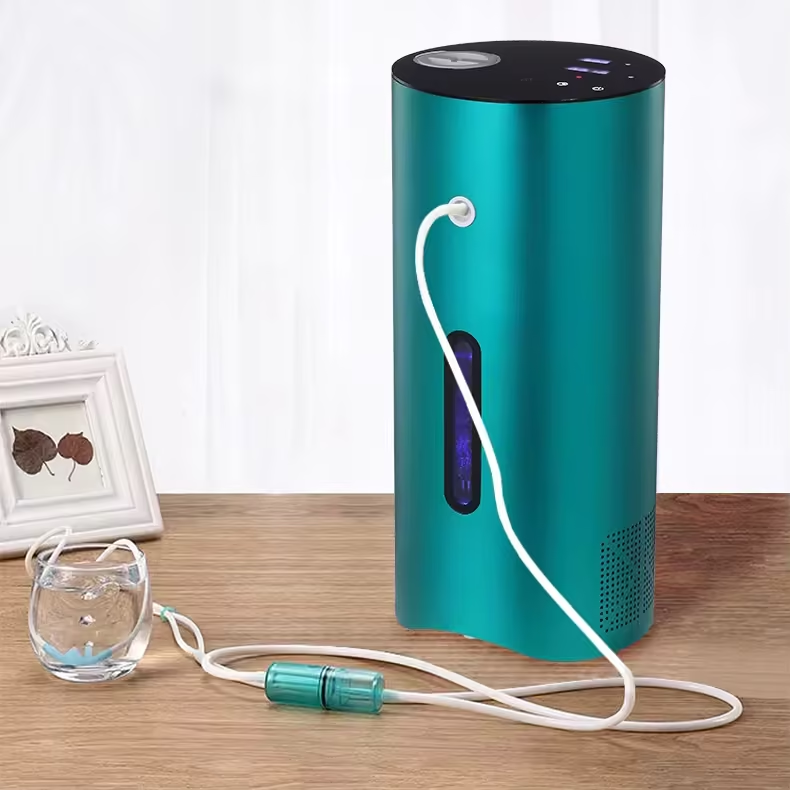
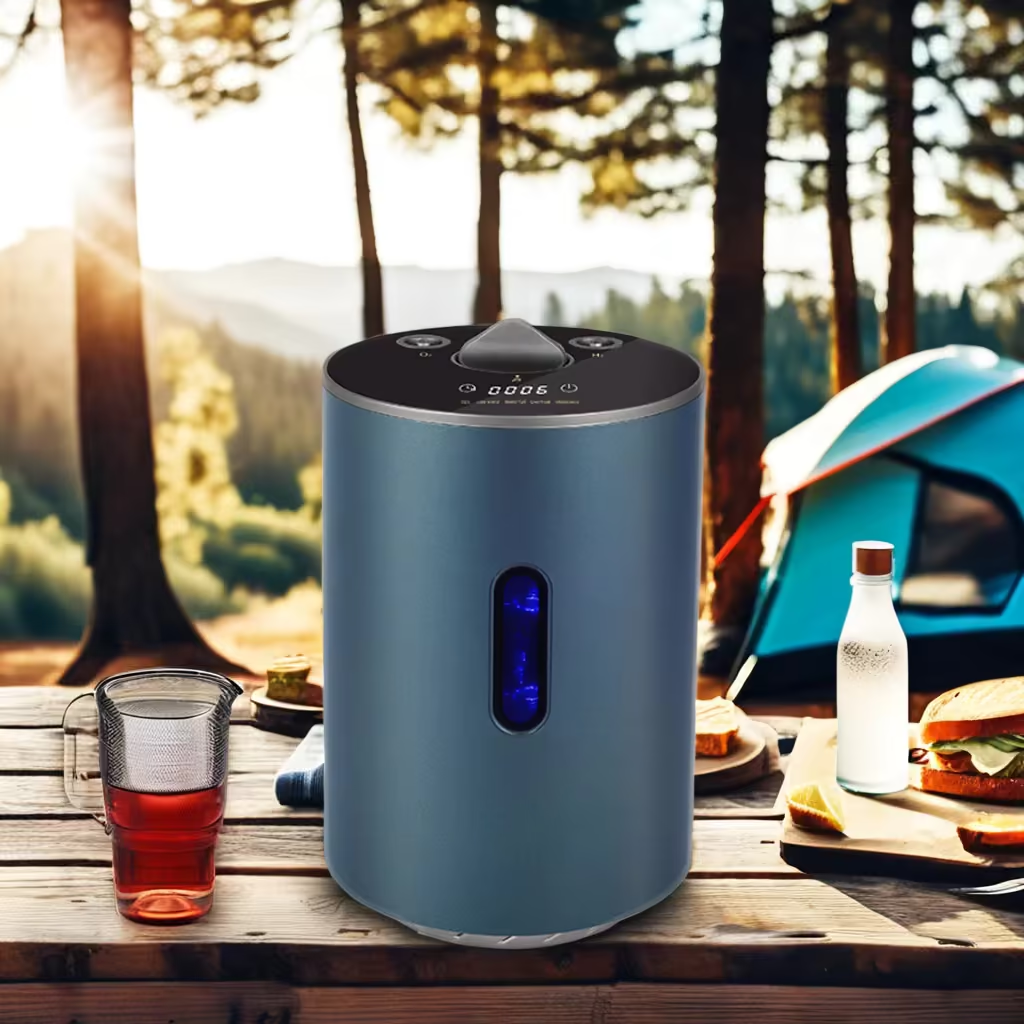




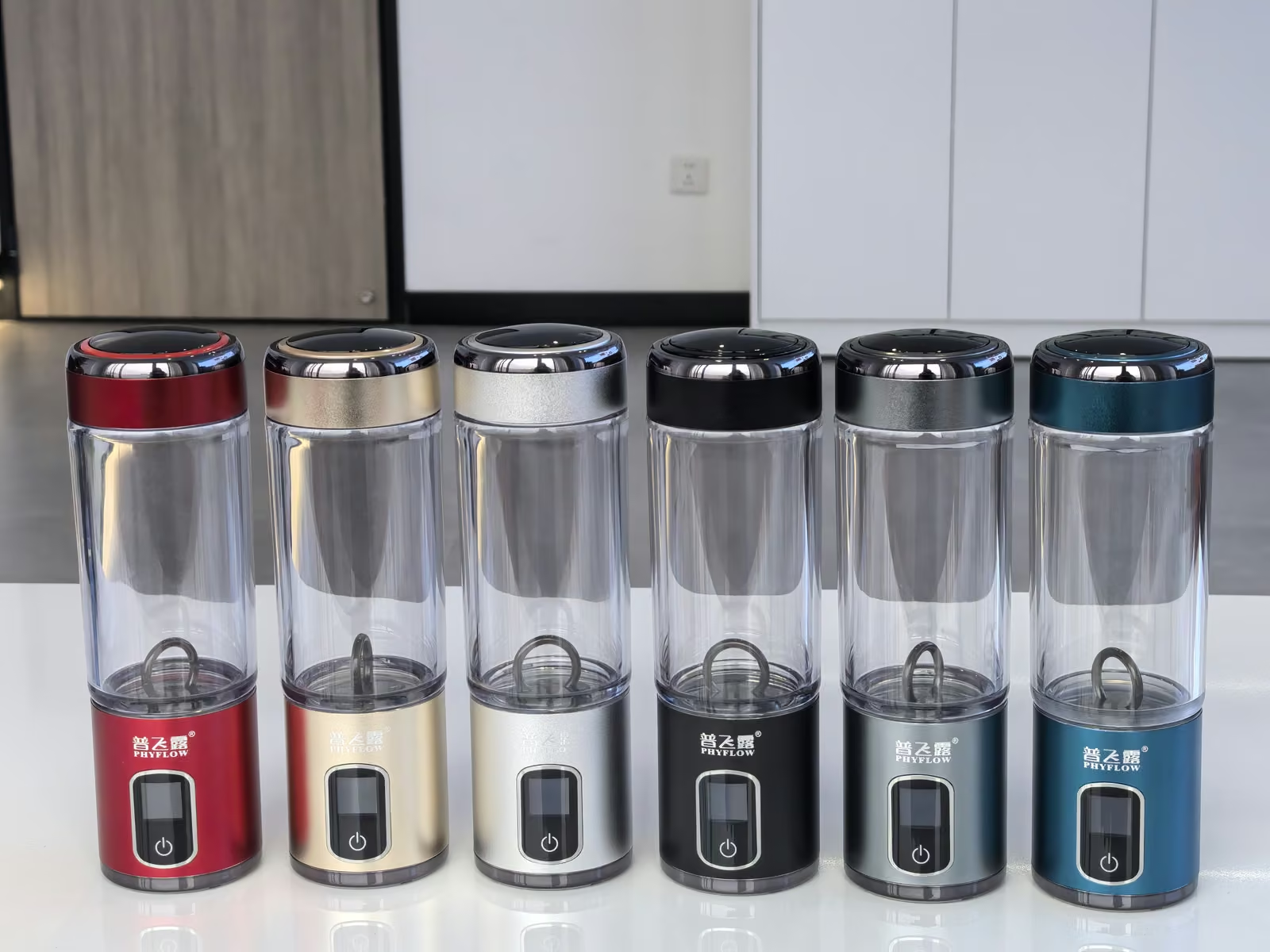
Hydrogen water bottle product tiers often use labels such as “basic,” “high concentration” and “long life.” Those labels are only useful when each tier represents a controlled product configuration and a matching body of test evidence.
Changing a timer from five minutes to ten minutes does not by itself create a higher-grade product. Nor does placing a larger concentration number in a marketplace title. A defensible product tier needs three things:
- a defined hardware or structural difference;
- a test method that isolates the effect of that difference; and
- production controls that keep the tested configuration consistent with the goods shipped.
This distinction matters to brand owners, distributors and OEM buyers because it determines whether a product range is technically meaningful, commercially repeatable and ready for due diligence.
An operating mode is not a product grade
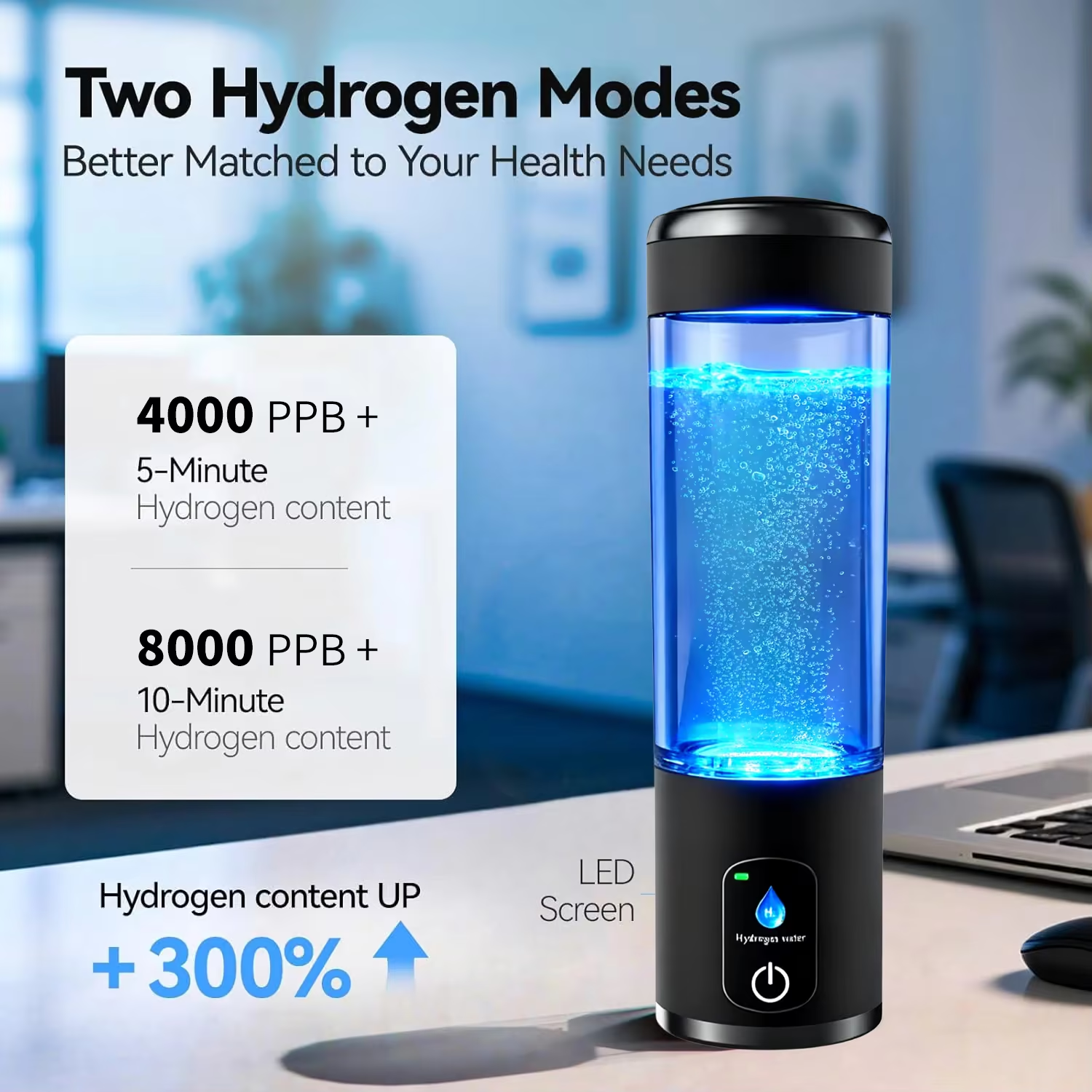
A bottle with five-minute and ten-minute programs has two operating modes. If both modes use the same electrolyzer, membrane, controller, current profile, pressure-management structure and bottle volume, they remain two settings of one hardware platform.
A longer cycle may change the measured dissolved-hydrogen result under some conditions. It may also increase heat, pressure and component stress. That is why runtime must be recorded as a test condition rather than presented as proof that the hardware belongs to a different tier.
The practical rule is simple:
A timer setting is a mode. A product tier requires a controlled configuration difference and evidence tied to that configuration.
The electrolyzer is the starting point
In a PEM electrolysis system, water is split at the electrodes and protons pass through a solid polymer electrolyte while the gas streams are separated. The US Department of Energy’s overview of water electrolysis explains this underlying PEM architecture.
For a portable hydrogen water bottle, the engineering variables that can create a genuine product difference include:
- active electrode area and perforation or flow pattern;
- electrode substrate, catalyst or coating specification and loading;
- proton-exchange membrane type, active area and incoming inspection criteria;
- compression, sealing and electrical-contact design inside the cell;
- gas-liquid path, hydrogen-oxygen separation and drainage design;
- pressure-relief and leak-control structure;
- operating current, voltage, thermal management and controller protection logic;
- serviceability, cleaning path and replaceable-cell strategy.
An enlarged plate may provide more active area, but it can also change current density, gas distribution, heat and sealing requirements. A different coating may improve one performance characteristic while increasing cost or introducing a different degradation mode. The correct question is therefore not “Which component looks bigger?” but “What changed, why did it change, and what result was reproduced under matched conditions?”
A practical evidence hierarchy
Not every document proves the same thing. Buyers should read evidence in layers.
| Evidence | What it can show | What it cannot prove alone |
|---|---|---|
| Marketplace title or brochure | The supplier’s commercial claim | Hardware identity, repeatability or service life |
| Controlled BOM and drawings | What should be built | Actual concentration or durability |
| Teardown and structure photos | Visible component and layout differences | Electrochemical performance or lifecycle |
| Controlled in-house test | Comparative performance under recorded conditions | Independent verification or long-term production consistency |
| Third-party test report | A result for the identified sample and method | Every unit, another model or unspecified conditions |
| Cycle-aging test with checkpoints | Performance retention, failures and drift over time | Unchanged future production unless BOM control remains in place |
| Production QC and change control | Ongoing conformity to the approved configuration | A performance claim without a validated test method |
The strongest product-grade claim combines these layers instead of asking one photograph or one number to carry the entire argument.
What each tier should mean
The following framework is suitable for OEM product planning. Exact acceptance values should be set only after testing; they should not be invented first and reverse-engineered into the catalog.
| Proposed tier | Required configuration basis | Minimum validation package |
|---|---|---|
| Basic version | A controlled entry-level cell, controller and pressure-management configuration with its own BOM revision | Dissolved-hydrogen results at the stated cycle time, sample count, water conditions and measurement method; safety and leakage checks |
| High-concentration version | A physical or electrical change intended to improve output, such as a different active area, catalyst/coating specification, membrane area, gas-management structure or current-control profile | Side-by-side tests against the basic version under identical water, temperature, volume, runtime and measurement conditions, using multiple units and repeated runs |
| Long-life version | Materials, coatings, seals, current density, thermal strategy or replaceable-cell design chosen to reduce degradation | Defined cycle-aging protocol, baseline and checkpoint performance, end-of-life criteria, failure record and post-test inspection across multiple units |
“High concentration” and “long life” are not synonyms. A cell optimized for higher output may operate at greater current or pressure and may not have the longest service life. A durability-focused version may deliberately use a more conservative operating window. Suppliers should treat concentration and lifecycle as two separate performance axes.
How to validate a high-concentration version
A credible comparison keeps the test conditions matched. At minimum, the record should identify:
- model, sample serial number and BOM or electrolyzer revision;
- water source, TDS or conductivity, temperature and fill volume;
- electrolysis runtime, current and voltage profile;
- bottle closure and pressure condition;
- measurement instrument or reagent, calibration status and measurement unit;
- delay between the end of electrolysis and measurement;
- number of units, repeated runs, mean, range and any excluded result;
- relevant by-product and leakage checks for the intended markets.
Hydrogen solubility is temperature dependent. The NIST Chemistry WebBook publishes Henry’s-law data and temperature dependence for hydrogen in water, reinforcing why water temperature and test timing cannot be omitted from a comparison.
Units also matter. A report expressed as 10^-9 (v/v) should not be casually relabeled as a mass-based ppb result or converted to ppm without confirming the method and basis. The report, product page and sales quotation should use the same result, unit and conditions.
How to validate a long-life version
Long life cannot be established by a clean teardown photograph or a claim about coating material. It requires a test that measures change over time.
A useful cycle-aging protocol should define one cycle, water type, runtime, rest period, cleaning schedule, ambient conditions and charging method. It should also set an end-of-life threshold before testing begins. Useful checkpoints include:
- dissolved-hydrogen performance at baseline and scheduled cycle counts;
- operating current, voltage and temperature drift;
- leakage, seal condition and pressure-relief function;
- membrane condition and cell wetting behavior;
- electrode surface condition and visible deposits;
- control-board, connector and battery faults;
- the number and type of failed units.
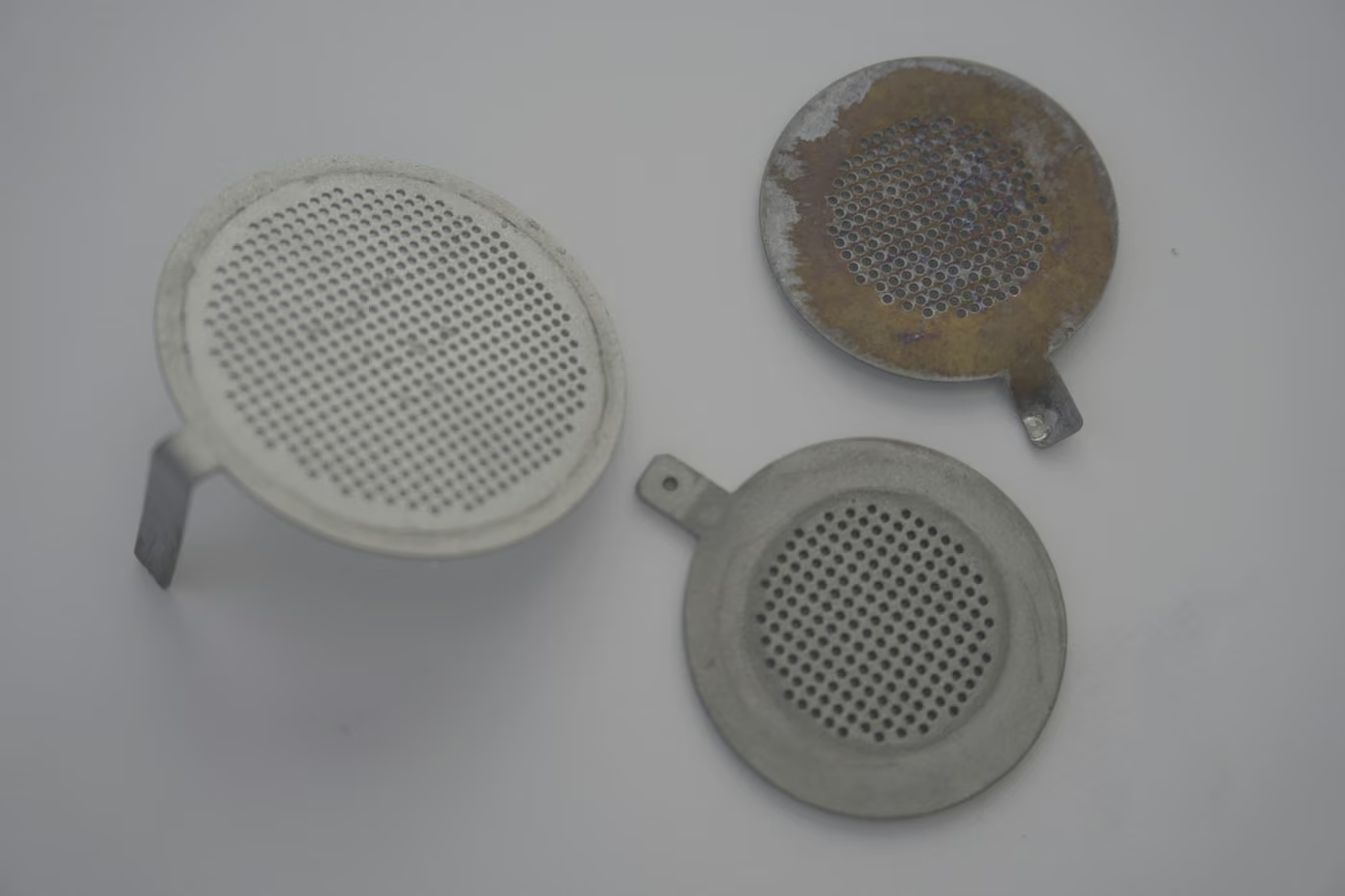
The Department of Energy’s PEM electrolysis technical-target methodology is written for industrial electrolyzers, not consumer hydrogen bottles. Its logic is still instructive: performance and durability should be demonstrated together on the same stack or system, and durability comparisons should be made at controlled operating conditions. Consumer-bottle protocols need their own suitable cycle definition and safety criteria, but should follow the same discipline.
The H88 evidence: what it proves and what it does not
PHYFLOW’s H88 report LH2025110014-1, issued by Guangdong Quantum Testing Technology Co., Ltd. on December 1, 2025, identifies an H88 sample and records a dissolved-hydrogen result of 8600 × 10^-9 (v/v). The reported procedure used Watsons distilled water at 74.3°F (about 23.5°C), a ten-minute production cycle and measurement immediately after the cycle, using T/GDID 1007-2018 as the test basis.
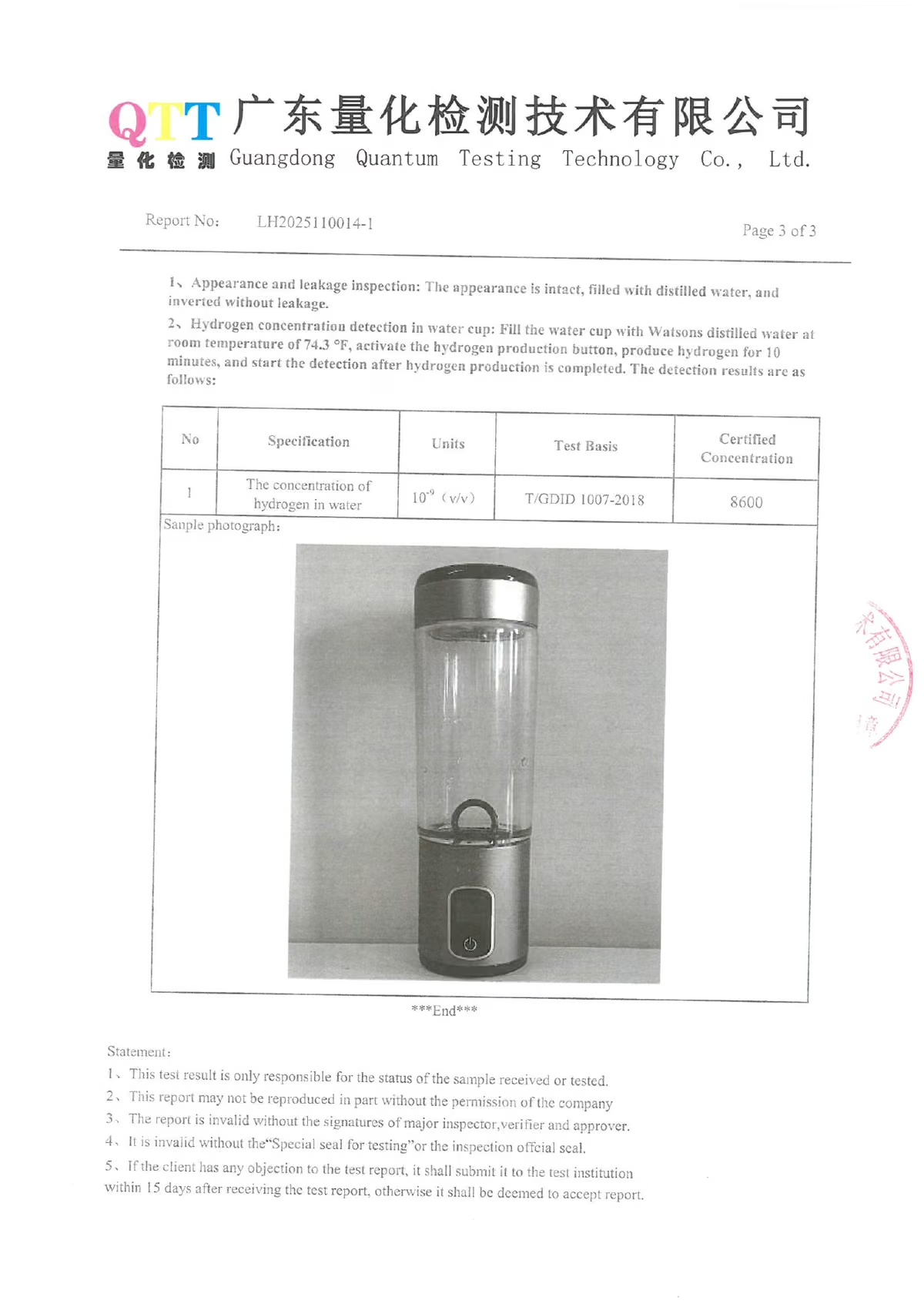
This is valid evidence for that H88 sample under the listed method and conditions. It does not, by itself, establish:
- the result of an H88A or another model;
- the mean or range across a production batch;
- performance under different water, temperature, volume or measurement conditions;
- concentration after storage or a delayed measurement;
- service life or performance retention after repeated cycles.
Our current H88/H88A documentation review also shows the same core parameters for both variants and identifies appearance and packaging as the present differences. On that evidence, the technically accurate positioning is “H88 Series design variants,” not separate performance tiers. A future performance-tier distinction should be introduced only when a different controlled BOM, structure or model-specific test package exists.
This is also why concentration figures in draft titles and marketplace listings must be normalized. A title is not a test record. Each SKU should have one approved specification, one evidence map and one revision owner.
For related teardown context, see Inside the H88 Hydrogen Water Bottle. Current public Alibaba product groups can be used to identify the commercial models, including H88, H88A, H90 and H225. These pages are commercial references; model-specific reports and BOM-controlled datasheets remain the evidence source for technical claims.
Product architecture should be documented before it is marketed
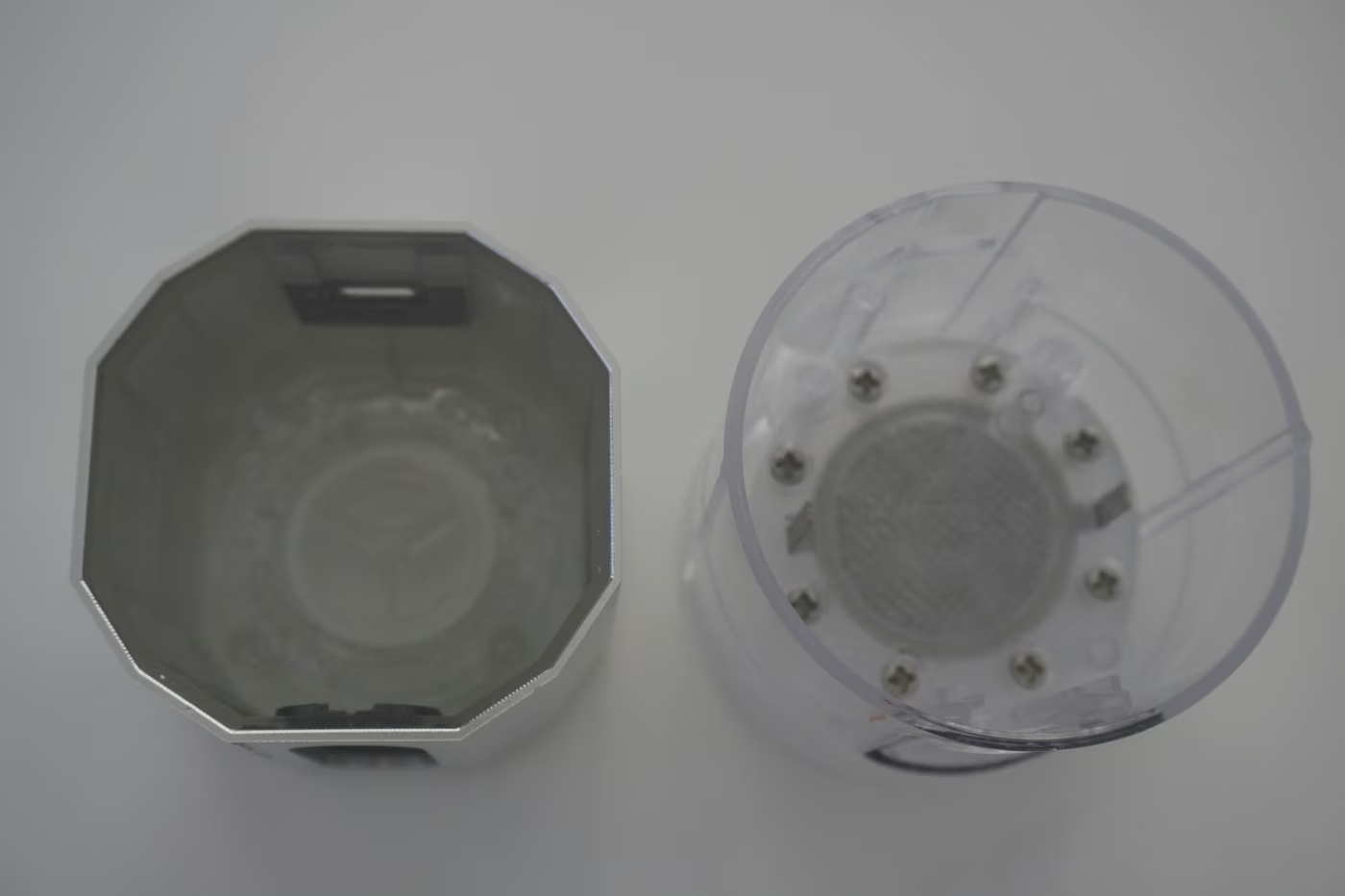
The most reliable OEM workflow begins with a product-definition sheet. Each model or tier should have a unique configuration code covering the electrolyzer, membrane, controller firmware, battery, pressure components, bottle volume and relevant seals. Any material or supplier change should trigger a documented review of the affected test evidence.
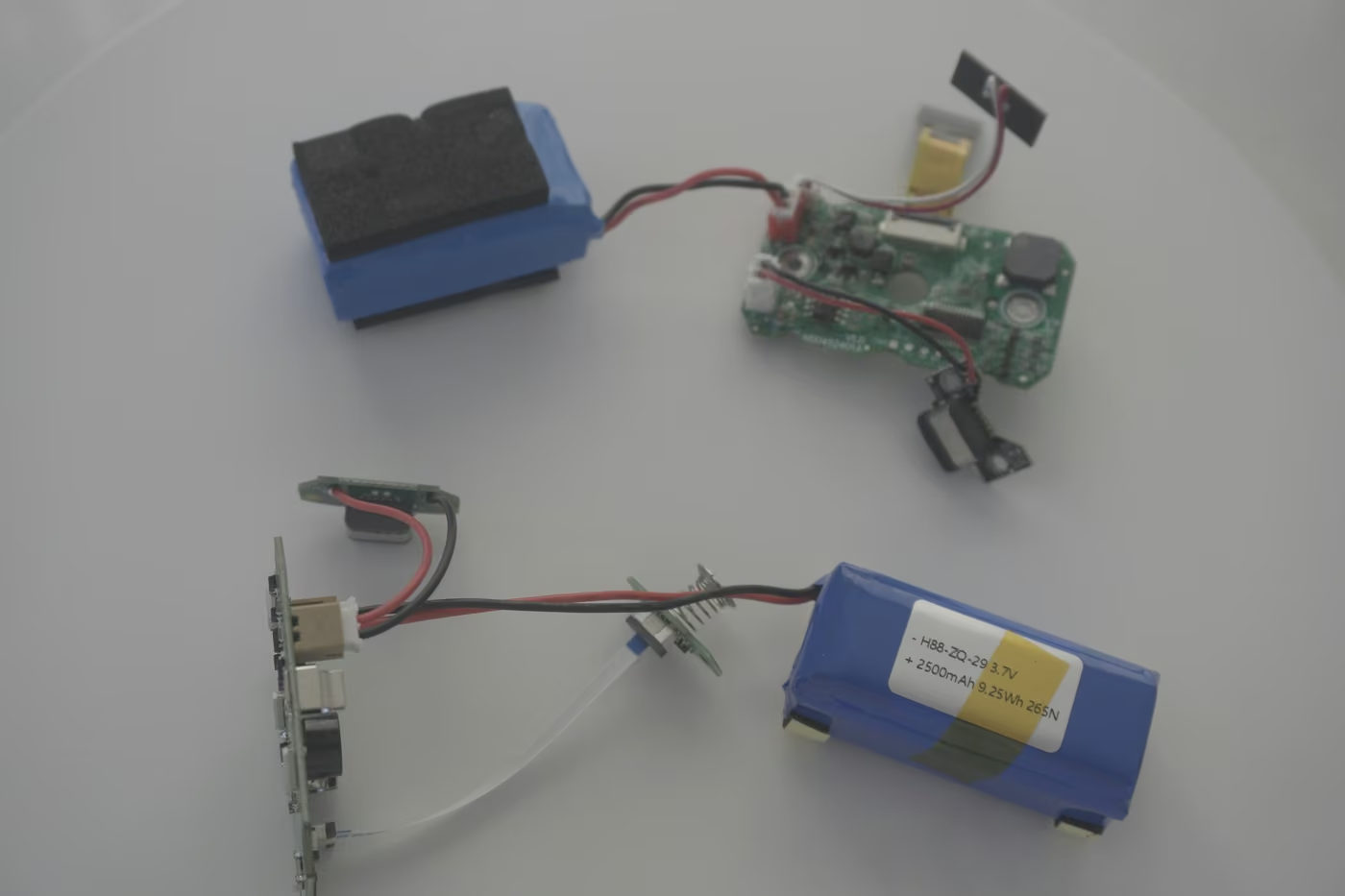
This connection between claims and configuration is also an advertising requirement, not just an engineering preference. The US Federal Trade Commission’s Health Products Compliance Guidance states that objective product claims need adequate substantiation before advertising. Hydrogen concentration, cycle life, material identity and health-related statements should therefore be reviewed separately, with evidence appropriate to each claim.
A buyer’s five-document request
Before accepting a three-tier product range, an importer or brand owner should request:
- A tier-difference matrix showing the exact cell, structure, controller and material differences.
- A matched-condition performance report comparing multiple units of the proposed tiers.
- A cycle-life report for any version described as long life or extended life.
- A certificate-and-report matrix mapping every document to the exact model and BOM revision.
- A production-control plan covering incoming materials, cell assembly, leakage, electrical protection, final performance sampling and engineering changes.
If these records show no physical difference and no distinct validation result, the products should be marketed as colors, housings, capacities or operating modes within one series, not as different performance grades.
Conclusion
A meaningful hydrogen water bottle tier is built from evidence in a fixed order:
configuration difference → controlled test → repeatability → claim
The basic version needs a defined and validated baseline. The high-concentration version needs a real design change plus matched-condition comparative data. The long-life version needs durability-focused construction plus cycle-aging results and an explicit end-of-life rule.
This approach gives OEM buyers a product range they can audit and gives suppliers a stronger basis for stable specifications. It also prevents concentration numbers, timer settings and model names from drifting apart across datasheets, quotations and marketplace pages.
For an OEM review, ask PHYFLOW for the model-specific specification, report-to-SKU matrix and available validation package before selecting a configuration.
Frequently asked questions
Does a longer electrolysis time make a bottle a higher grade?
No. It creates a different operating condition. A higher grade requires a defined hardware or control difference and comparative evidence under matched conditions.
Is a larger electrode always better?
No. Active area is only one variable. Current density, coating, membrane, contact resistance, gas flow, heat, sealing and pressure management also affect performance and durability.
Can one third-party report support an entire product series?
Only when the report scope and documented product equivalence justify that use. A report for one identified model and sample should not automatically be applied to another model or BOM revision.
What proves a long-life hydrogen water bottle?
A predefined cycle-aging test across multiple units, with baseline and checkpoint performance, failure records and an end-of-life threshold. Material descriptions and appearance photos alone are insufficient.