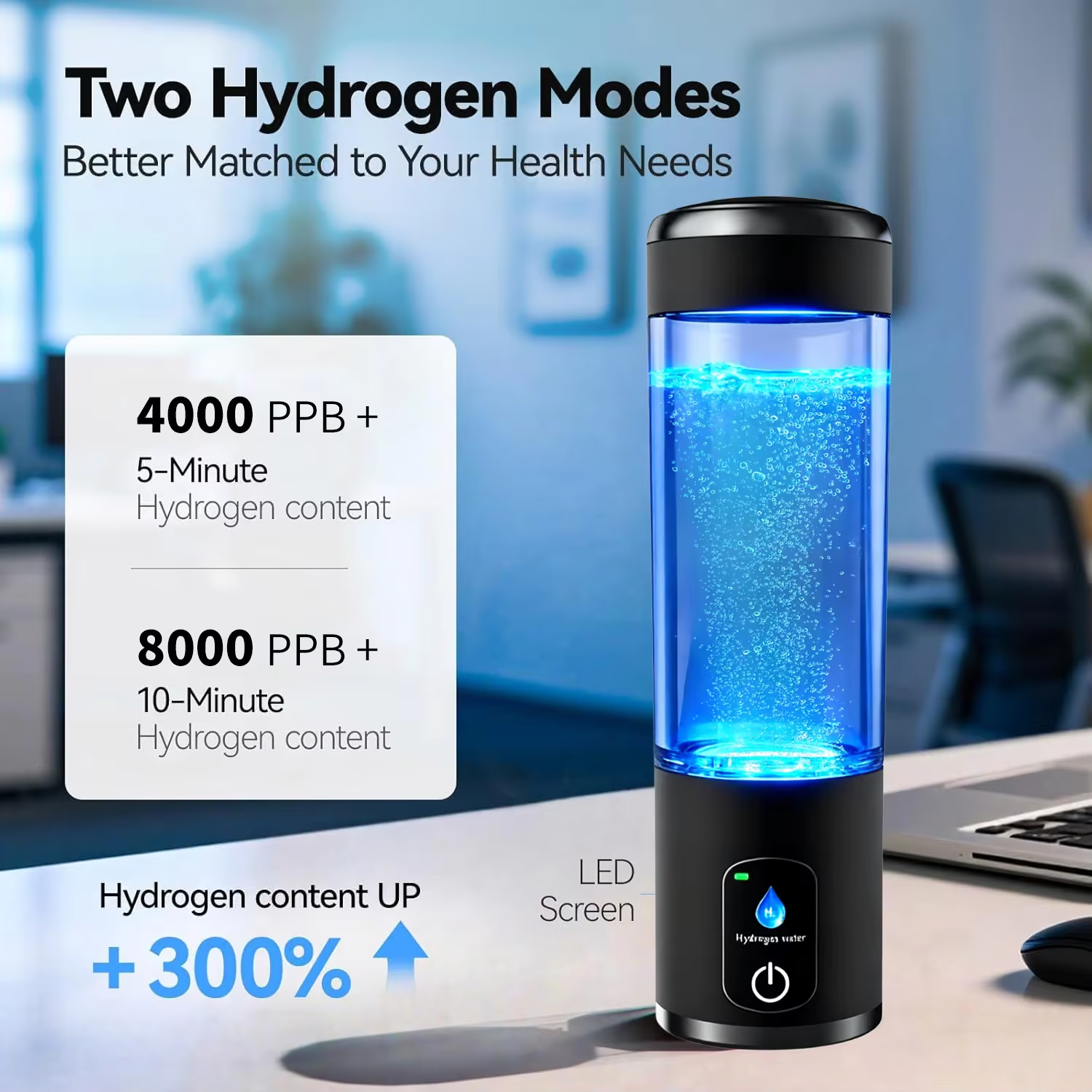
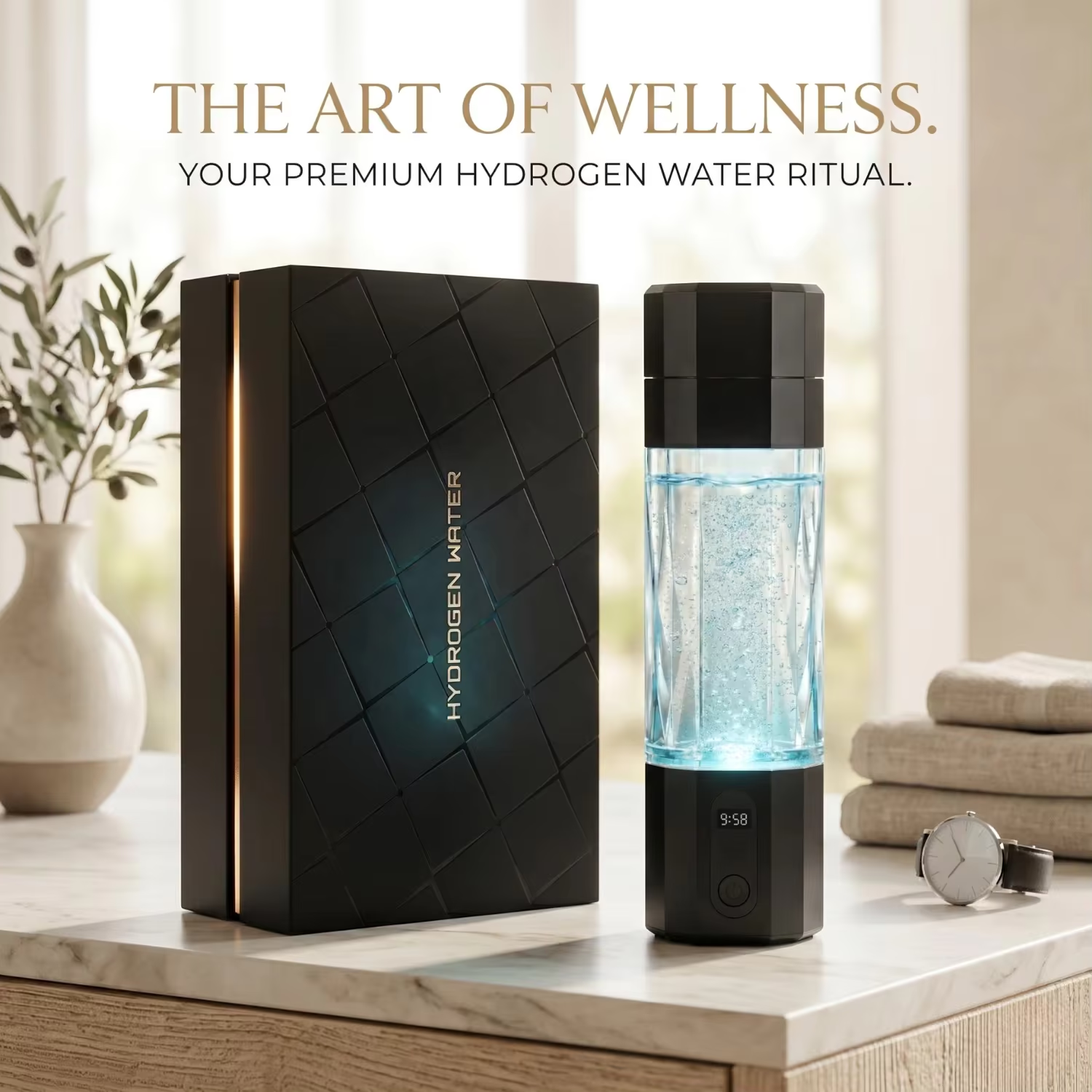
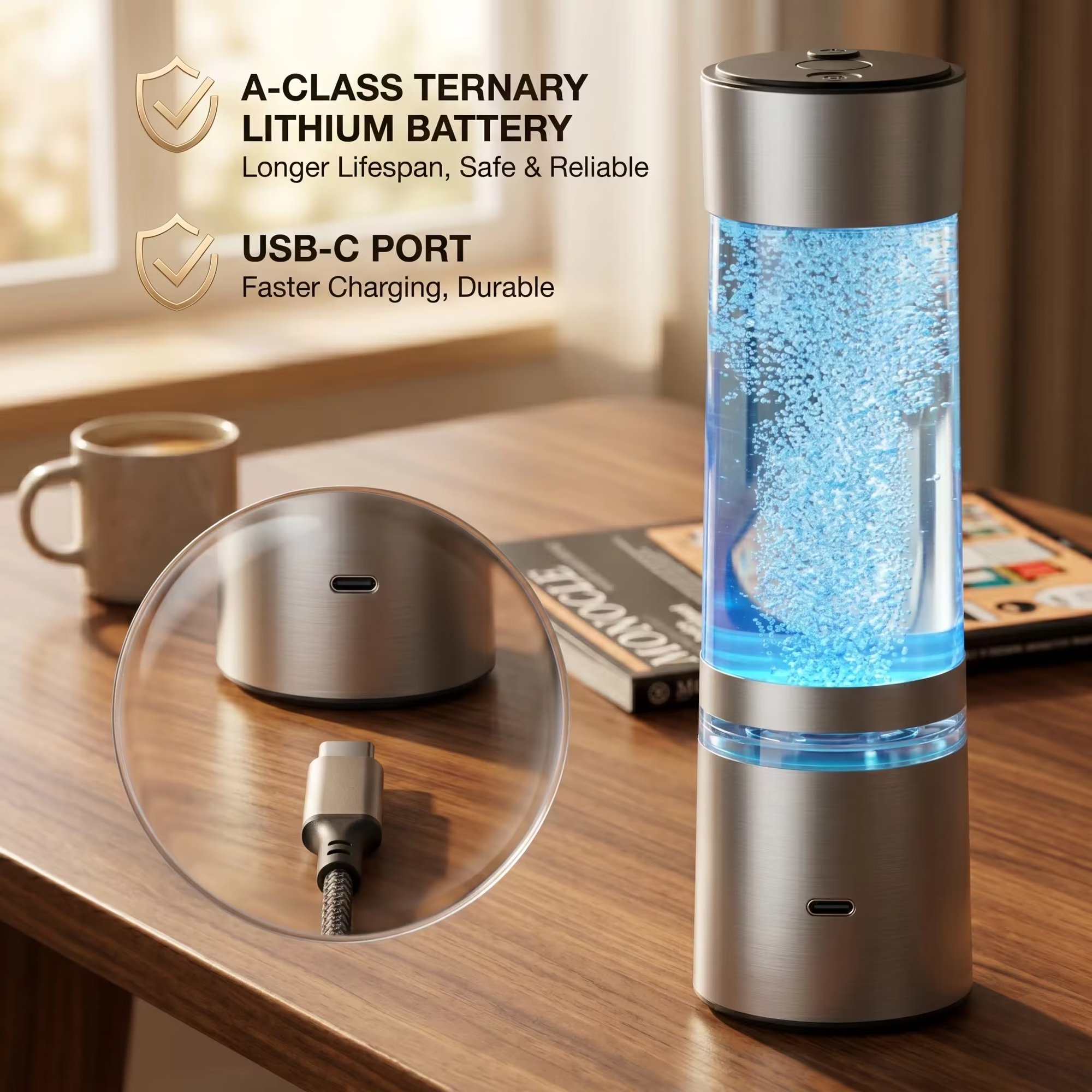
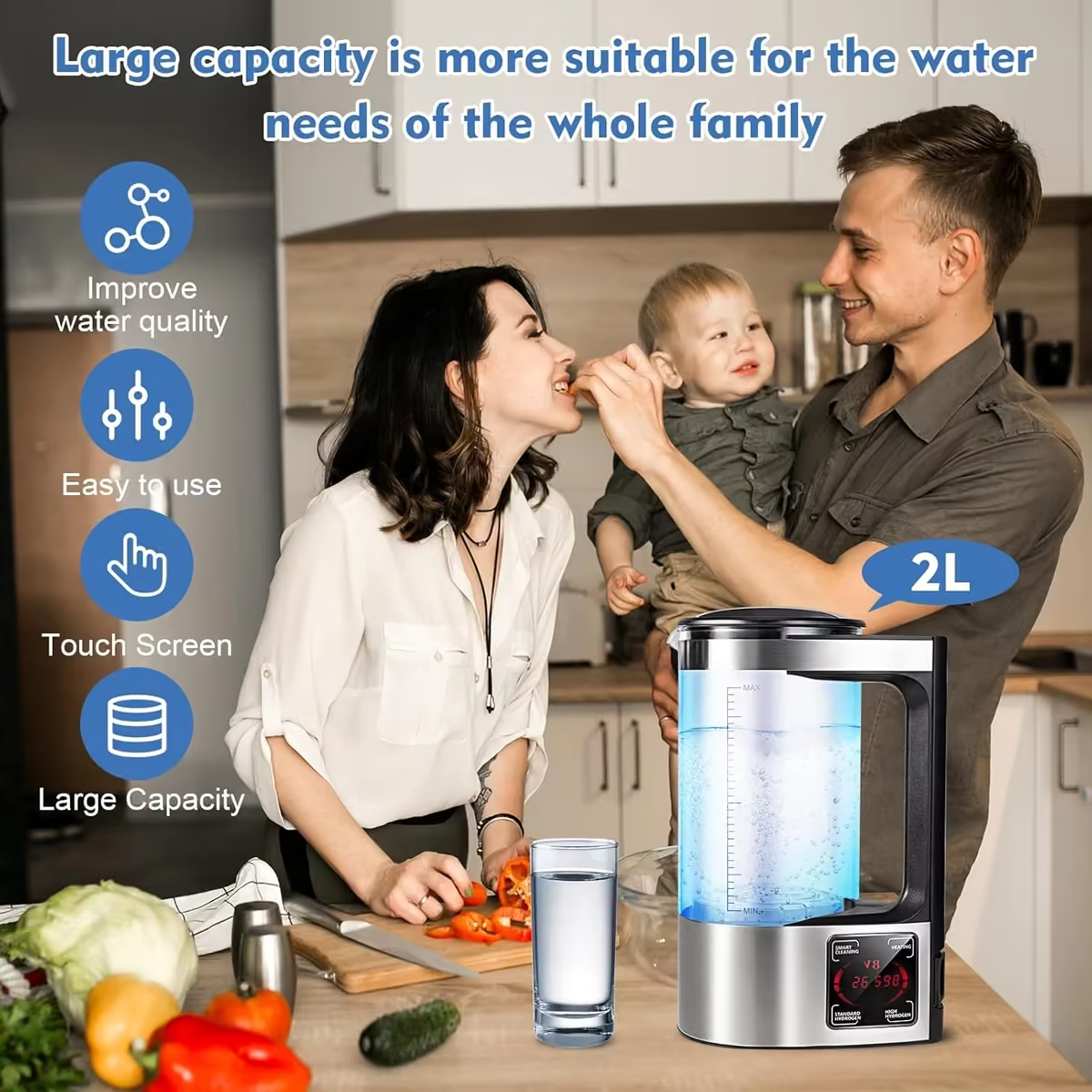



A short request such as "Please quote your best hydrogen water bottle" rarely produces a quote that buyers can use. One supplier may price a standard unit without packaging, another may include a custom box, and a third may assume a different battery, logo process, test requirement, or trade term. The prices look comparable, but the projects are not.
A structured request for quotation, or RFQ, gives every supplier the same starting point. It also helps the buyer identify missing decisions before samples, artwork, and production deadlines begin to create cost.
Start With the Commercial Context
Suppliers can recommend a more suitable platform when they understand how the product will be sold. Include:
- Buyer company, website, country, and contact person
- Target market and planned sales channel
- Expected launch date
- Estimated first order and expected reorder volume
- Target retail position or landed-cost range, if available
- Whether the project is a standard wholesale order, private label, or a deeper customization program
An Amazon launch, retail distribution program, corporate gift project, and regional distributor order may require different packaging, documentation, accessories, and minimum order quantities.
Define the Exact Product Type
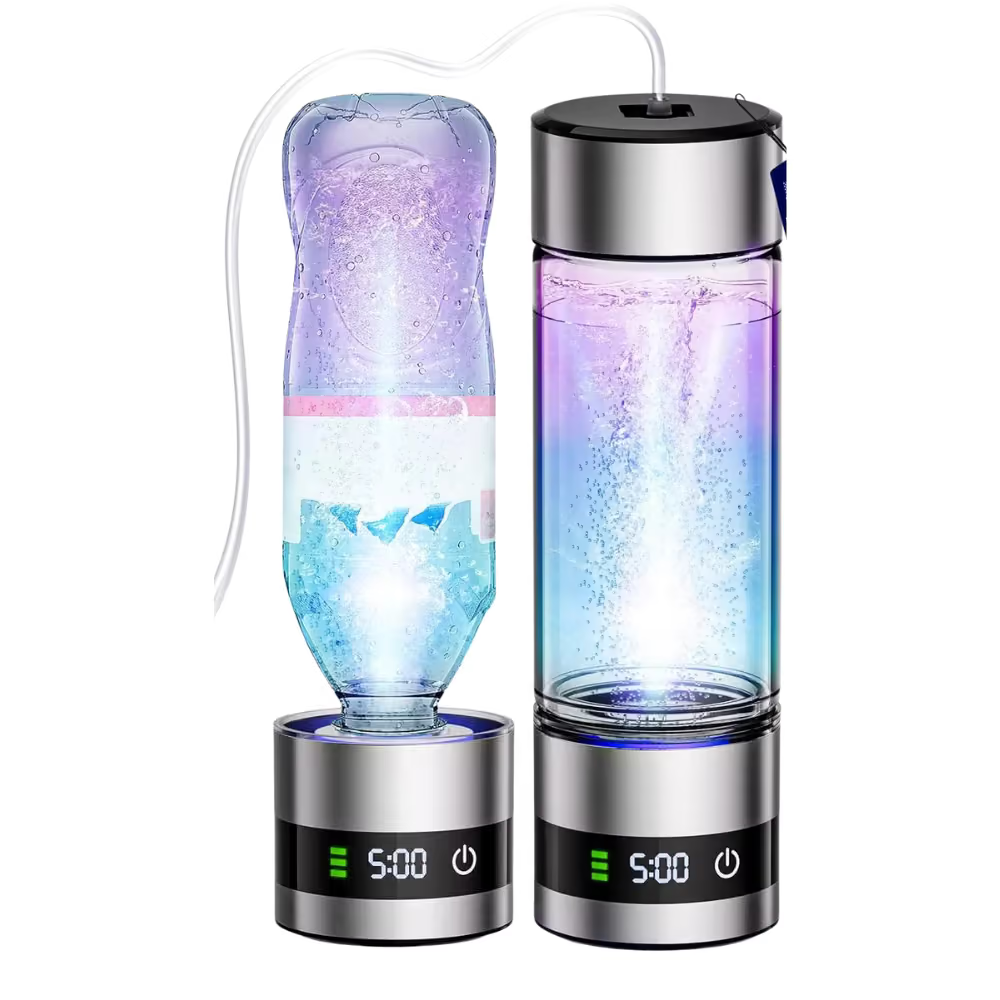
"Hydrogen water bottle" can refer to several capacities, materials, form factors, and electrolysis configurations. Ask the supplier to quote an exact model and identify it consistently in the product sheet, sample invoice, test information, manual, and packaging proposal.
Specify or request a recommendation for:
- Capacity and approximate dimensions
- Bottle-body and water-contact materials
- Charging interface and whether an adapter is included
- Standard cycle options
- Supported water conditions and cleaning method
- Required accessories
- Preferred colors
- Packaging format
When the buyer does not yet know which model fits, the RFQ should state the channel, price position, capacity range, and key constraints so the supplier can recommend two or three options instead of sending an entire catalog.
Ask for Test Conditions, Not Only a Performance Number
If dissolved-hydrogen output is part of the sourcing decision, request the test method and conditions behind the stated value. The response should identify the exact model, water source, water temperature, cycle duration, measurement timing, instrument or method, and whether the result is from an internal or independent test.
Do not compare numbers produced under different conditions as though they are directly equivalent. Ask for individual readings or the underlying report where available, then use one repeatable protocol when evaluating samples.
Keep product-function evidence separate from health marketing. A sourcing RFQ should focus on specifications, test transparency, materials, operation, and documentation. Consumer medical or health claims require separate qualified review for the target market.
Break Customization Into Separate Price Lines
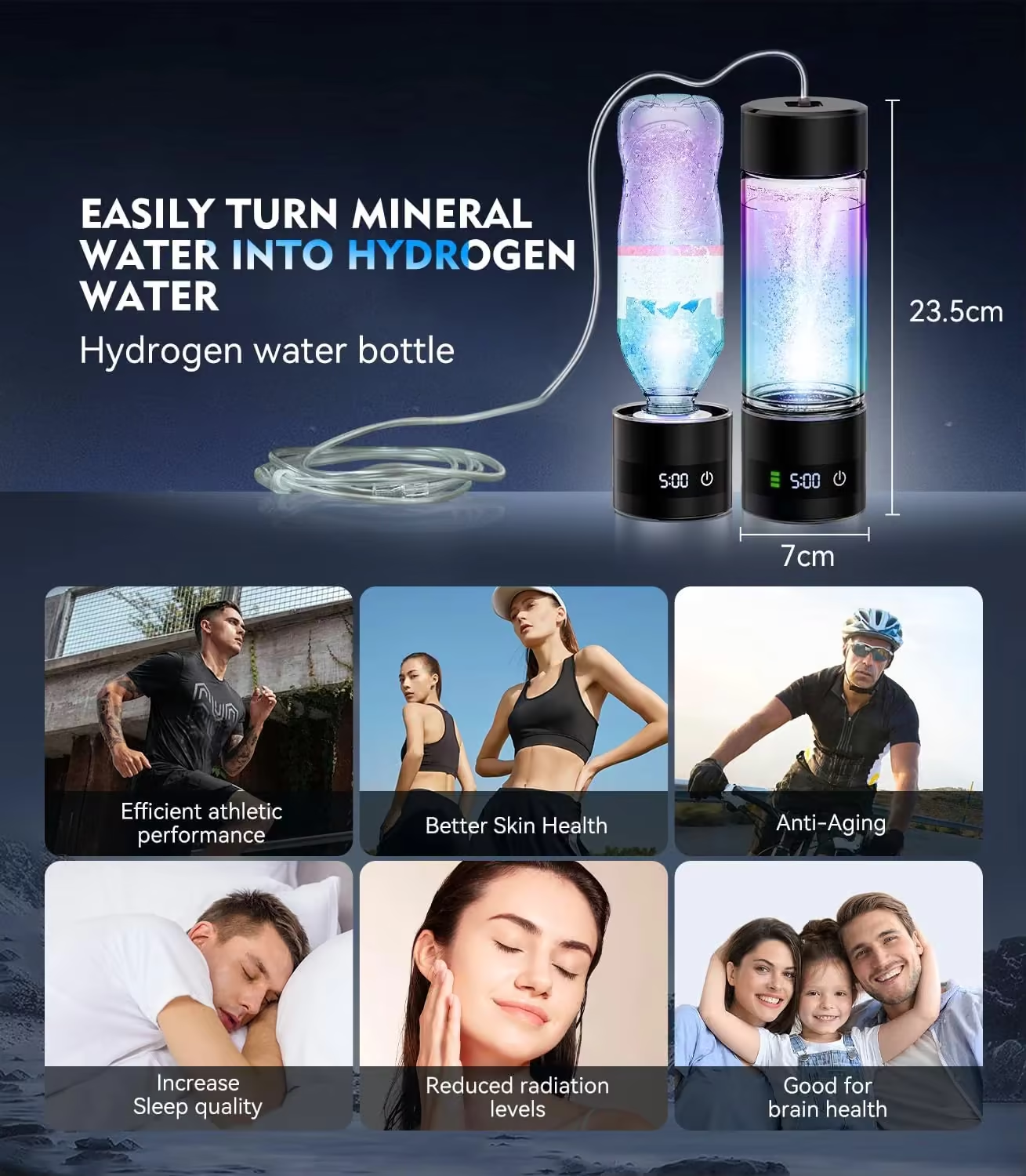
Logo, color, and packaging changes do not always share the same minimum order quantity. Ask suppliers to quote each level separately:
- Standard product with standard packaging
- Product with a custom logo
- Product with a custom color
- Product with custom retail packaging and manual
- Product requiring tooling, structural, firmware, or accessory changes
For each level, request the MOQ, unit cost, setup or tooling cost, artwork requirements, sample process, and additional lead time. This gives the buyer a practical path from a pilot order to a more customized reorder.
Request Model- and Market-Specific Documents
Documentation requirements depend on the exact configuration and destination. Instead of asking, "Do you have all certificates?" list the target market and ask which records are available for the quoted model.
The request may include:
- Product specification and material statement
- Water-contact material information where applicable
- Electrical or electromagnetic-compatibility records where applicable
- Battery specification and transport test summary
- Adapter records if an adapter is included
- User manual and warning text
- Packaging dimensions, weight, and material data
- Available quality-control or inspection records
Confirm the applicable requirements with the buyer’s importer, compliance adviser, logistics provider, marketplace, or relevant authority. A report for a similar model should not automatically be assumed to cover the quoted product.
Make the Sample Quote Actionable
Ask the supplier to state:
- Sample unit price
- Branding and packaging included in the sample
- Sample preparation time
- Shipping method and cost
- Whether the sample charge can be credited against a bulk order
- Whether the sample comes from normal production
- Which changes will be made before mass production
The sample should establish an approval standard. Photograph the product, accessories, labels, manual, and packaging; record the configuration; test repeatability and leakage; and document all agreed corrections.
Compare Complete Commercial Terms
A complete bulk quotation should include:
- Unit-price tiers
- MOQ by customization level
- Logo, packaging, tooling, and setup costs
- Production lead time after deposit and artwork approval
- Payment terms
- Incoterms and port of loading
- Retail-pack and master-carton quantities
- Carton size and gross weight
- Warranty terms
- Spare-parts options
- Defect reporting and corrective-action process
Do not compare an EXW quote with a DDP or landed-cost estimate without separating logistics, duties, taxes, and risk. State the requested Incoterm and destination clearly.
Add a Supplier Response Checklist
Require every supplier to return the quotation with the same supporting items:
- Dated quotation with model number
- Product sheet
- Current product and packaging photographs
- Test explanation or available report
- Document list for the quoted model
- Customization options
- Sample invoice or pro forma invoice
- Named sales and technical contacts
This makes missing information visible and reduces repeated email exchanges.
Score More Than Price
Use a weighted scorecard covering product fit, document readiness, test transparency, sample quality, packaging readiness, communication, warranty support, change control, and price competitiveness.
A low quote can become expensive if the model is unclear, packaging must be reprinted, battery documents do not match, sample quality cannot be reproduced, or the supplier has no defect process. The purpose of an RFQ is not just to obtain a number. It is to reveal whether the supplier can define and manage the complete project.
Copy-and-Use RFQ Summary
Before sending an inquiry, confirm that it contains:
| RFQ section | Required information |
|---|---|
| Buyer context | Market, channel, launch date, first order, reorder estimate |
| Product | Model, capacity, material, charging, cycle, accessories |
| Performance | Test method, conditions, timing, report availability |
| Branding | Logo, color, packaging, manual, barcode requirements |
| Documents | Exact model, destination market, battery and material records |
| Sample | Cost, timing, configuration, shipping, approval process |
| Bulk terms | Price tiers, MOQ, lead time, payment, Incoterm, cartons |
| After-sales | Warranty, spare parts, defects, corrective action |
The Best RFQ Creates a Better First Conversation
A clear RFQ does not lock the buyer into every detail. It creates a common baseline and identifies where supplier recommendations are still needed. Suppliers can respond faster, buyers can compare like with like, and both parties can identify technical, packaging, documentation, and commercial risks before money is committed.
That is the difference between collecting prices and sourcing a product responsibly.
Author Bio
The PHYFLOW Editorial Team supports OEM/ODM sourcing projects for hydrogen water bottles and related hydrogen-generation products. Its work focuses on product specifications, sample evaluation, documentation, packaging, and buyer-supplier communication. This article provides sourcing information, not medical, legal, or regulatory advice.
Buyer Resources and Related Guides
- Compare PHYFLOW hydrogen water bottle models
- How to choose an OEM hydrogen water bottle manufacturer
- The OEM Hydrogen Water Bottle Quality-Control Checklist Most Buyers Miss
- Why Water Temperature Can Change a Dissolved-Hydrogen Test Result
- A Private-Label Packaging and Battery-Shipping Guide for Hydrogen Water Bottles
- SPE/PEM Hydrogen Water Bottle Failure Modes: A Buyer’s Test Plan
Discuss Your Hydrogen Water Bottle Project
Share your target market, expected quantity, preferred model, branding scope, packaging requirements, and document needs with PHYFLOW.