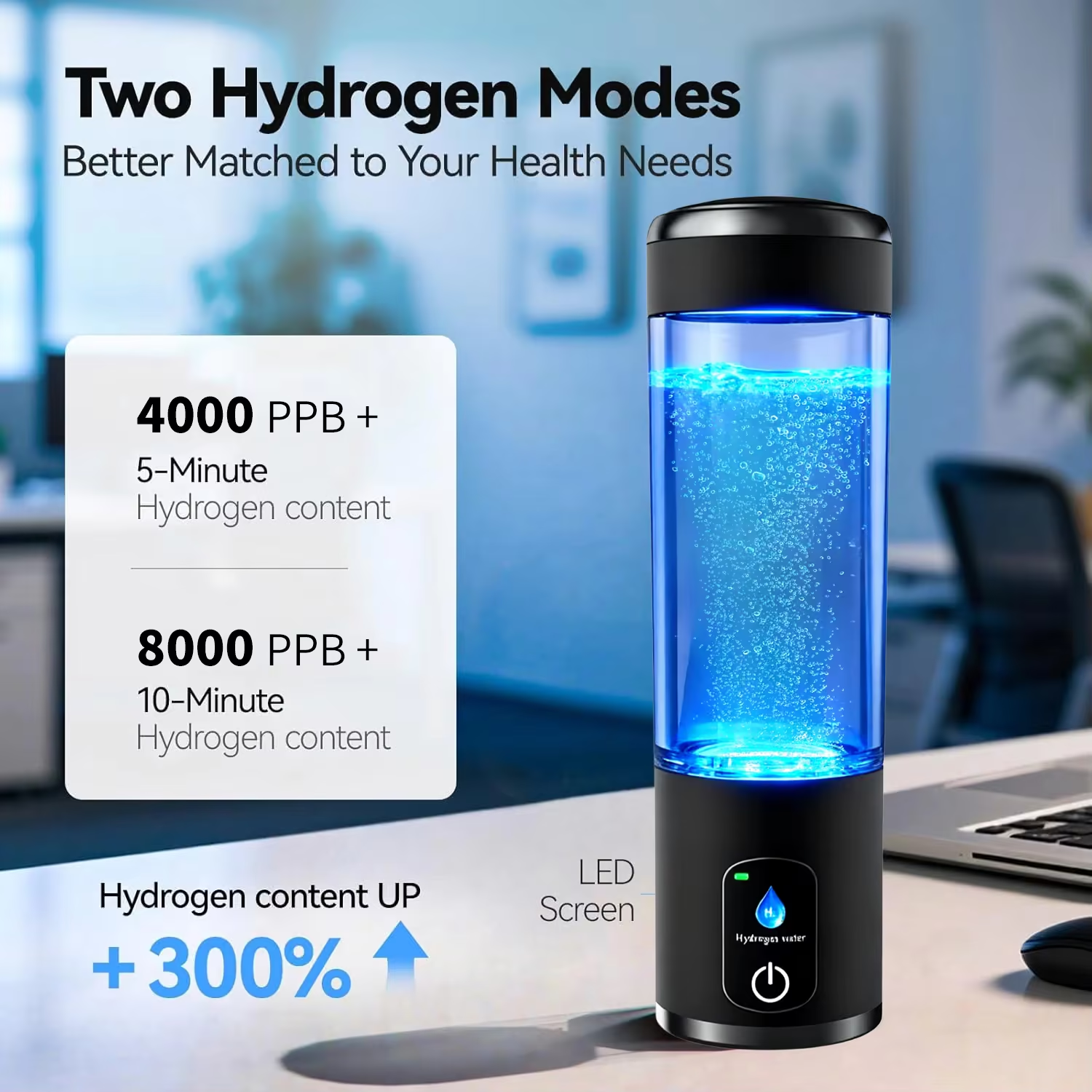
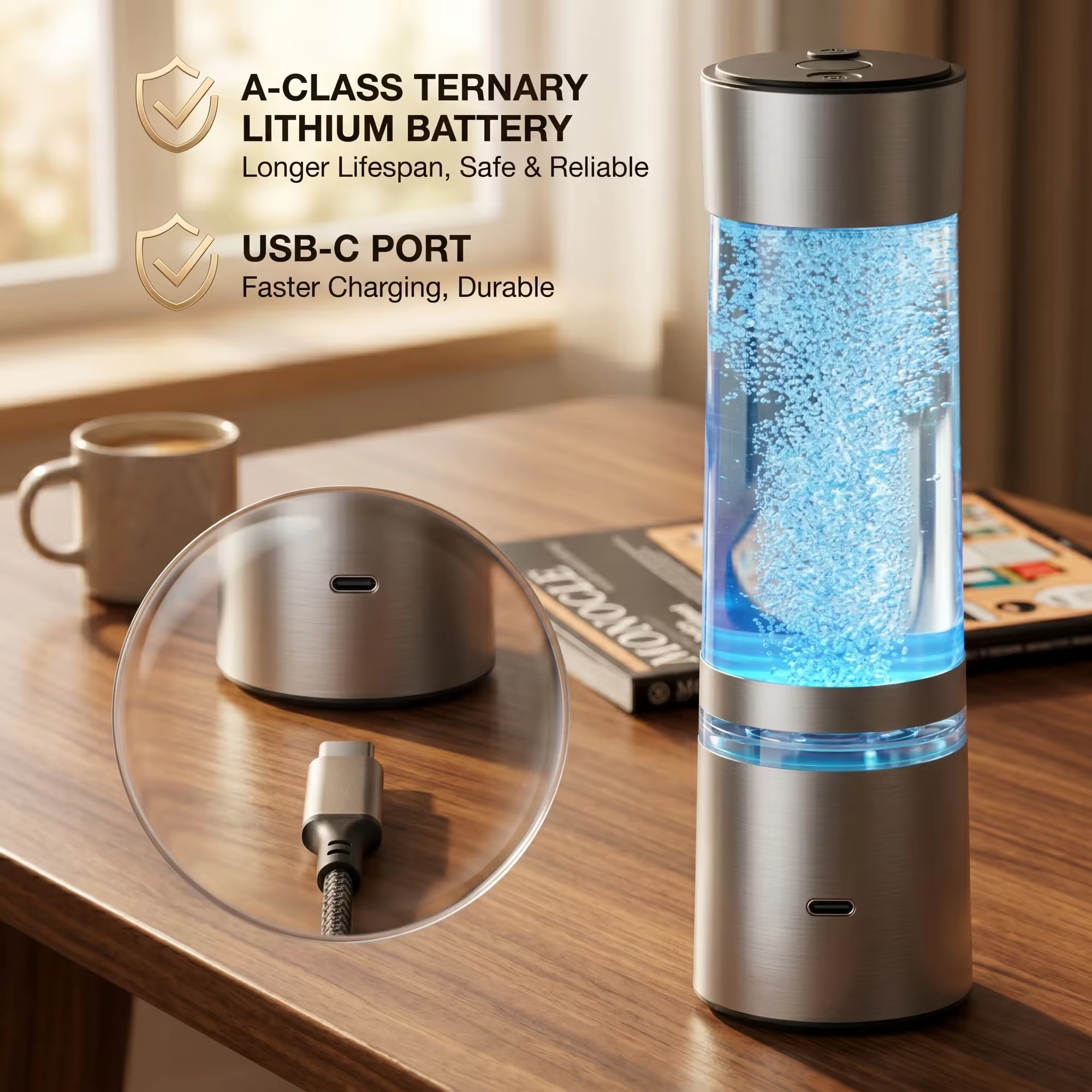
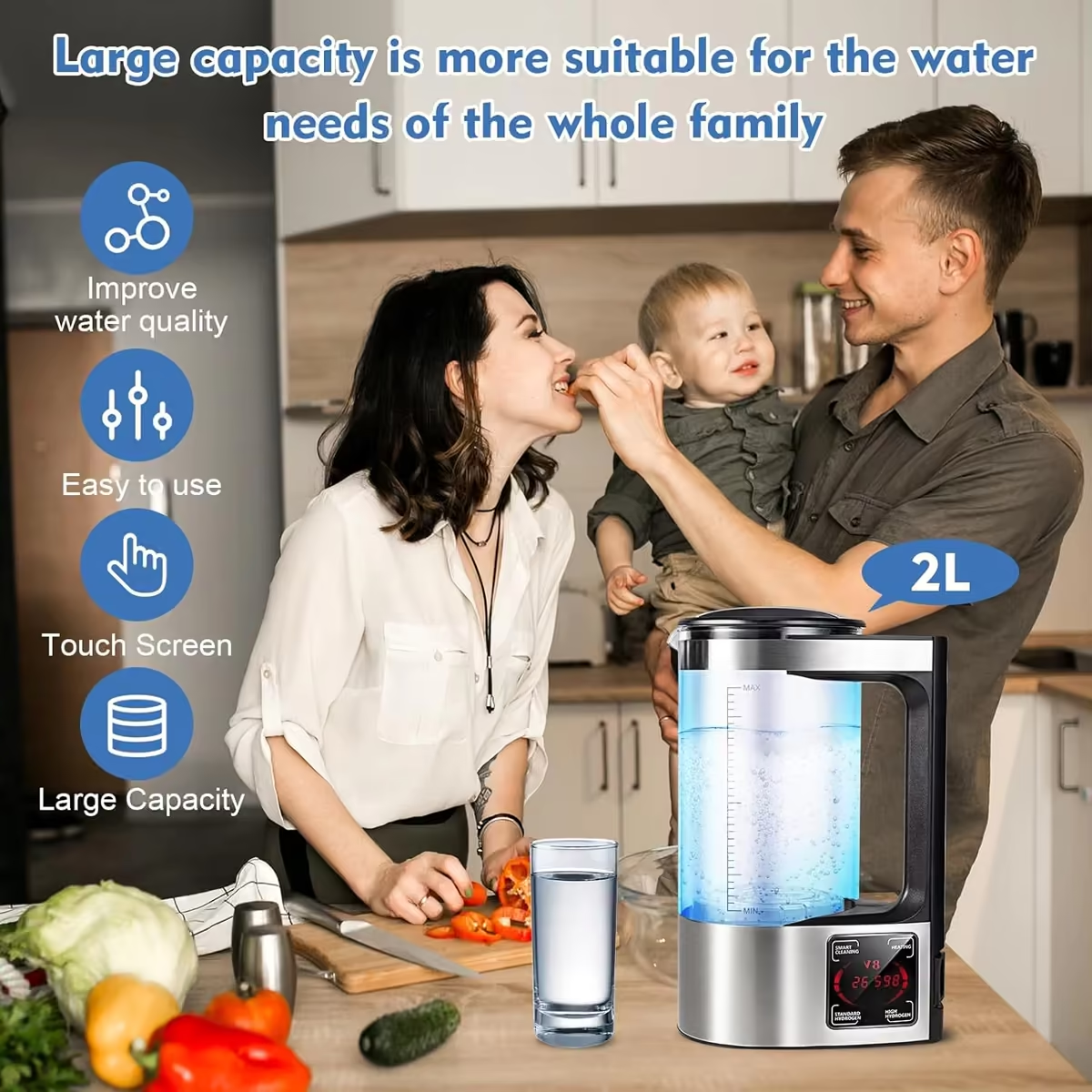


Two hydrogen water bottles can be tested by two careful people and still produce different dissolved-hydrogen readings. The difference may come from the products, but it may also come from water temperature, sampling delay, agitation, container geometry, headspace, or the measurement method itself.
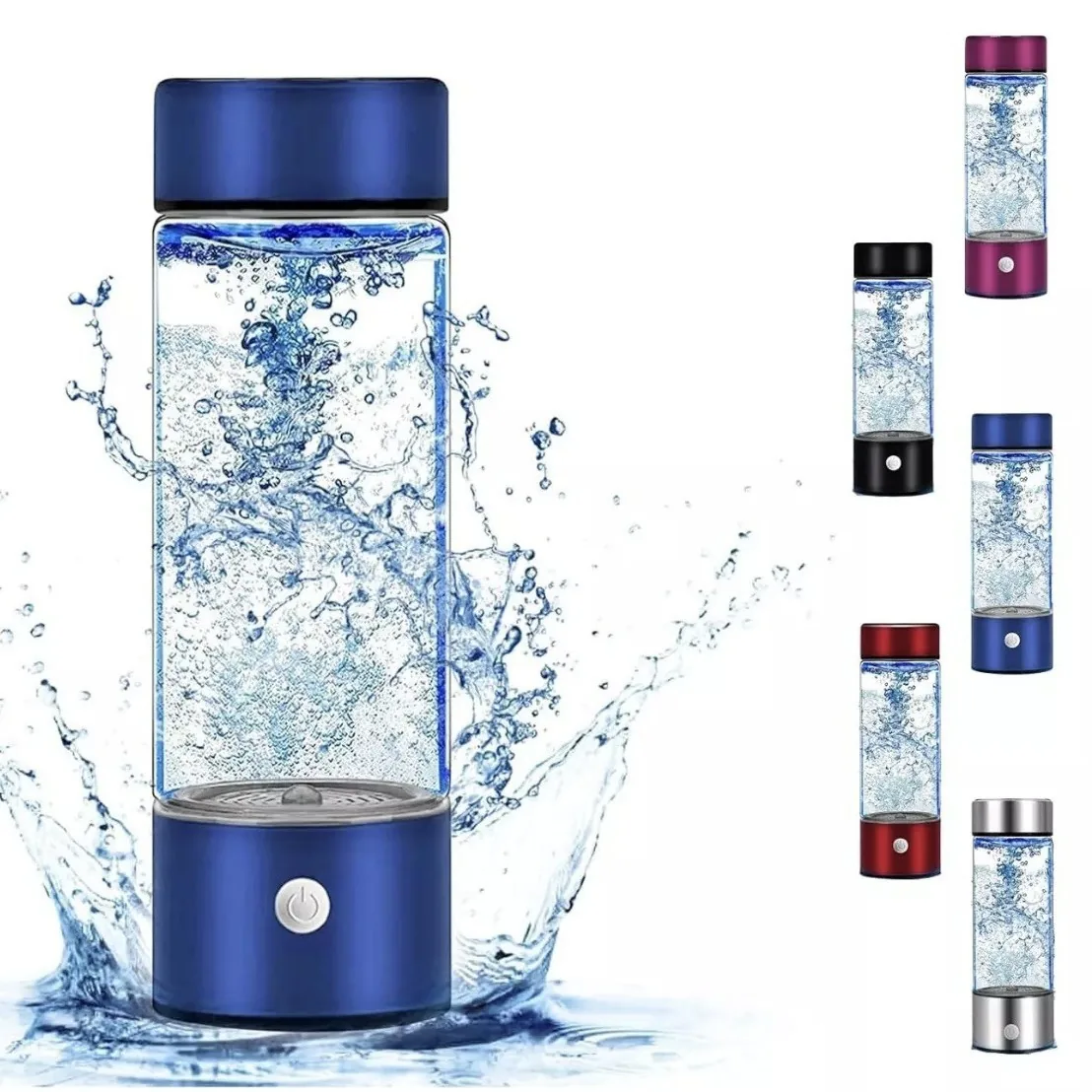
This matters to buyers because a concentration number is often treated as the main performance specification. Without a documented method, however, the number may be difficult to reproduce and unsuitable for comparing suppliers.
Dissolved Hydrogen Is a Measurement System, Not Just a Product Number
Molecular hydrogen is a gas. Its behavior in water is influenced by equilibrium conditions, including temperature and hydrogen partial pressure. The NIST Chemistry WebBook publishes temperature-dependent Henry’s law information for hydrogen, illustrating why temperature belongs in any defensible test record.
In a working bottle, the measurement is also affected by conditions that are not at equilibrium. Hydrogen is being generated, bubbles may be present, pressure may change, and the sample begins losing gas after the cycle or container is opened. The result therefore describes the product and the test procedure together.
A buyer should be cautious when a report provides a single value but omits water temperature, water source, cycle time, sampling delay, and instrument information.
Why Temperature Matters
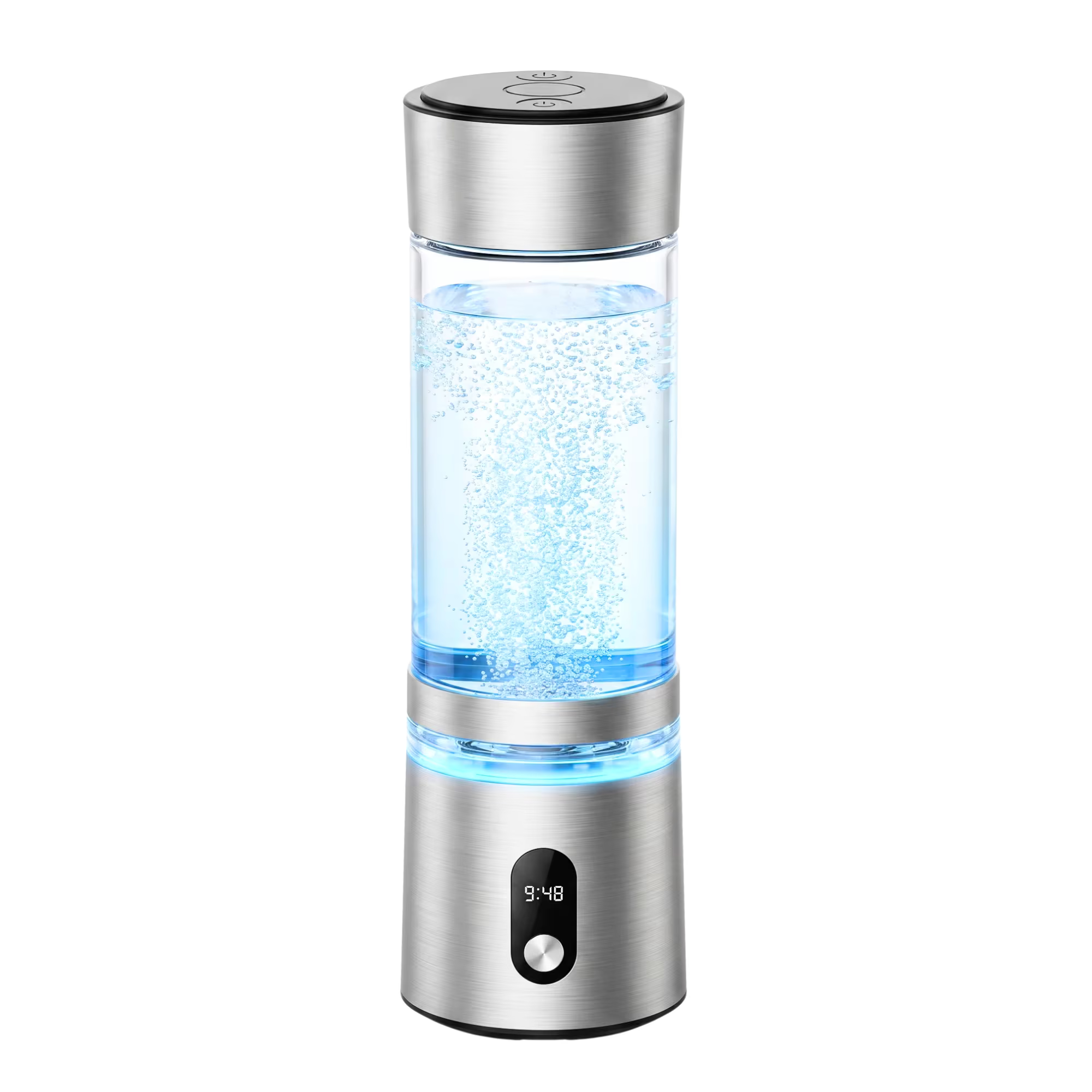
Gas solubility changes with temperature. A test using chilled water should not be compared directly with one using room-temperature or warm water unless the method accounts for that difference.
Temperature can also affect the product itself. Battery output, electrolysis behavior, cycle control, pressure, sensor response, and membrane performance may not be identical across temperatures. The instrument used to measure dissolved hydrogen may also require temperature compensation or have a specified operating range.
For that reason, "use the same water" is not enough. A repeatable comparison needs the same starting temperature and a record of the temperature at measurement.
Sampling Delay Can Be as Important as Generation Time
Once a cycle ends, dissolved hydrogen does not remain fixed indefinitely. Opening the vessel, pouring the water, increasing surface area, stirring, shaking, and leaving the sample exposed can all affect gas loss.
Compare these two procedures:
- Tester A measures immediately in the original vessel with minimal disturbance.
- Tester B pours the water into a wide cup, waits several minutes, and then measures.
Even if both testers use the same instrument, their results may not be comparable. A report should state the time between cycle completion and measurement and describe how the sample was transferred.
When a method requires headspace or a closed sampling vessel, its filling and sealing procedure should also be documented.
Bubbles and ORP Are Not Direct Concentration Measurements
Visible bubbles can demonstrate gas generation, but bubble size and quantity do not establish the dissolved concentration. Some gas may remain undissolved or escape.
Oxidation-reduction potential, commonly called ORP, can respond to hydrogen and other characteristics of the water. It is not a direct, universal substitute for measuring molecular hydrogen concentration. A negative ORP reading alone should not be presented as a specific dissolved-hydrogen value.
Buyers should ask suppliers to name the actual method used for the reported concentration.
Common Measurement Approaches
Several approaches are used in the market. Each requires a defined procedure and an understanding of its limitations.
Gas Chromatography
Laboratories may use gas chromatography with a defined headspace or extraction method. It can provide strong analytical evidence when sampling, calibration, standards, calculations, and uncertainty are documented. Results still depend on how the water sample is collected and preserved before analysis.
Dissolved-Hydrogen Meters or Sensors
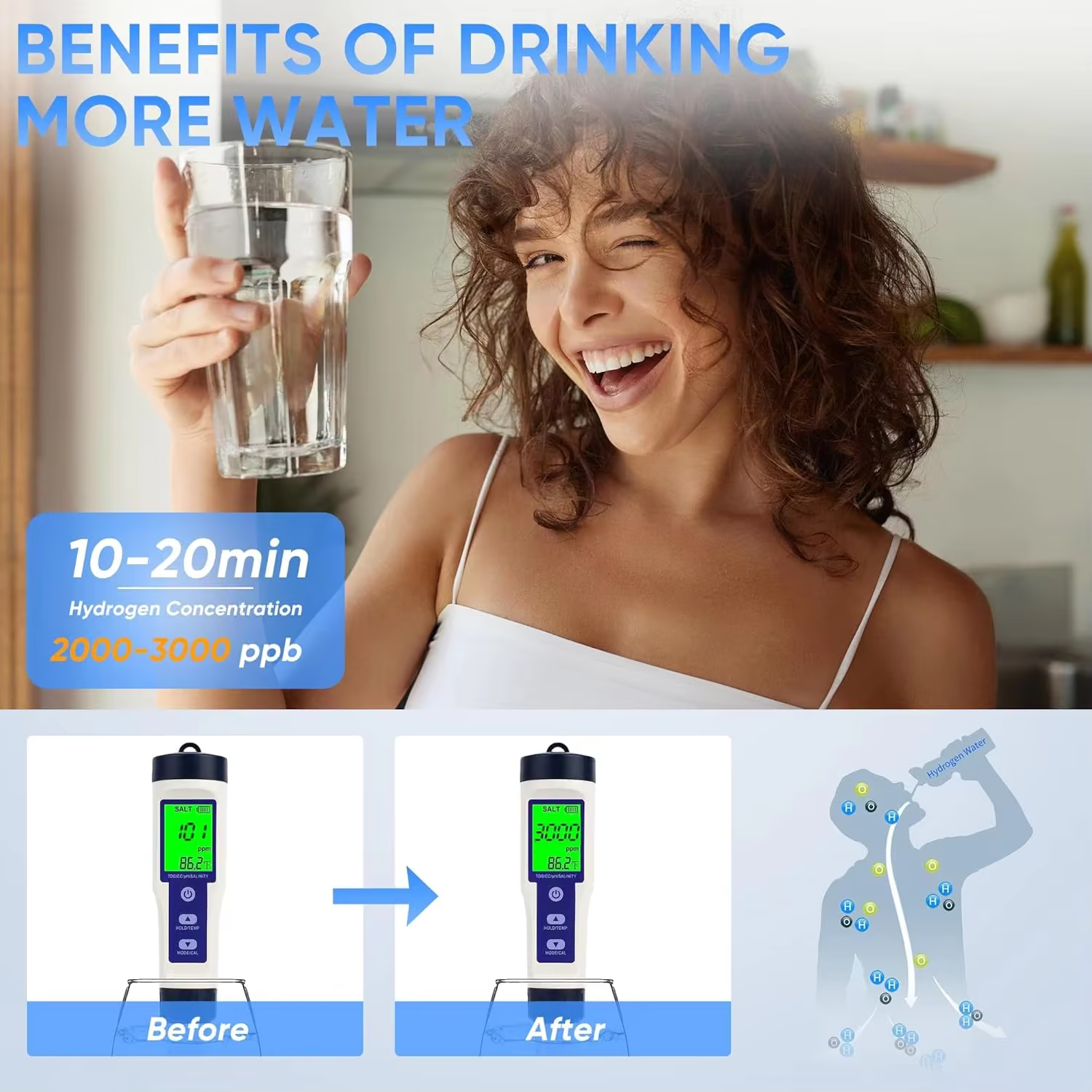
Portable meters can be useful for repeated comparative tests. Buyers should record the instrument model, calibration procedure, sensor condition, temperature range, response time, and whether the reading is taken in the original vessel or a separate sample.
Reagent or Titration-Type Kits
Reagent kits can be practical for screening, but endpoint interpretation, drop size, reagent condition, interfering substances, and the method’s measurement range can affect the result. They should be used exactly as instructed and should not be treated as interchangeable with laboratory analysis.
The key question is not which method produces the largest number. It is which method is sufficiently controlled and repeatable for the buyer’s decision.
A Repeatable Buyer Test Protocol
When comparing samples, create one written protocol and apply it to every product.
Record the following:
- Supplier and exact model number
- Product serial or batch identifier, if available
- Water source and any filtration or mineral characteristics provided
- Fill volume
- Starting water temperature
- Ambient temperature
- Battery charge condition or power-supply condition
- Selected cycle and actual cycle duration
- Whether the vessel remained closed
- Time from cycle completion to measurement
- Transfer method and sample-container details
- Measurement instrument or reagent method
- Calibration, blank, or control procedure
- Number of repetitions
- Individual readings, not only the average
Use at least the same handling sequence for all samples. If a reading appears unusual, repeat the entire cycle rather than selectively repeating only one measurement step.
Report Variation Instead of Hiding It
A series of results is more informative than a single best reading. Report each repetition, the average or median where appropriate, and the observed range. If the method has a known resolution or uncertainty, disclose it.
In mass-concentration reporting, one part per million is one thousand parts per billion. Confirm that every party is using the same unit and that no conversion between gas volume, mass concentration, or another basis has been made without explanation.
Buyers should also distinguish an internal factory test, an independent laboratory test, and a demonstration performed with a portable kit. Each can be useful, but they do not carry the same evidentiary weight.
Build the Test Around the Decision
For supplier screening, a controlled comparative test may be sufficient. For product specifications, advertising claims, dispute resolution, or regulatory review, a more formal laboratory method and documented uncertainty may be necessary.
The protocol should also reflect the product’s instructions. Testing with unsupported additives, unsuitable water, extreme temperatures, or altered cycle settings can create a result that does not represent normal use and may damage the product.
The Most Useful Question to Ask a Supplier
Instead of asking only, "How many PPB does the bottle produce?" ask:
"Can you provide the exact model, water source, temperature, cycle, sampling timing, measurement method, individual readings, and report date behind that number?"
That question changes the conversation from marketing to reproducibility. A lower but repeatable and well-documented result may be more useful to a buyer than a larger number that cannot be reproduced.
Hydrogen Concentration Comparison Record
Use one record for every tested unit. Complete the conditions before running the cycle so the method is not changed after a result is seen.
| Field | Record before testing | Record after testing |
|---|---|---|
| Product identity | Supplier, model, revision, unit or batch ID | Any deviation from the quoted configuration |
| Water | Source, treatment, volume, starting temperature | Temperature at measurement if relevant |
| Power and cycle | Charge state, selected mode, stated duration | Actual duration and any interruption |
| Sampling | Original vessel or transfer method | Exact delay after cycle completion |
| Measurement | Method, instrument, range, calibration or control | Every individual reading and unit |
| Repetition | Units and repeats planned | Range, average or median, and anomalies |
How to Interpret Supplier Evidence
| Evidence | Useful for | Does not establish by itself |
|---|---|---|
| Live demonstration | Confirming that a sample operates | A repeatable concentration specification |
| Portable-meter readings | Controlled screening and trend checks | Equivalence to a laboratory method |
| Independent laboratory report | Model-specific evidence under stated conditions | Every unit, water type, cycle, or production batch |
| Repeated matched test | Comparing samples under one written protocol | Medical benefit or regulatory approval |
Frequently Asked Buyer Questions
Is a larger PPB number always a better product?
No. First confirm the unit, method, conditions, variation, safety, materials, durability, and whether the reported model matches the quoted product.
Can ORP be converted directly into dissolved hydrogen?
ORP is influenced by several water characteristics and is not a universal direct conversion to dissolved-hydrogen concentration. Ask for the actual measurement method.
How many repeats should a buyer request?
There is no universal count for every decision. Define the number of units and repeats before testing, retain every result, and use a qualified laboratory when the result will support a formal specification or claim.
References
- NIST Chemistry WebBook, Hydrogen: https://webbook.nist.gov/cgi/cbook.cgi?ID=C1333740&Mask=10
- U.S. Department of Energy, Hydrogen Production: Electrolysis: https://www.energy.gov/cmei/fuels/hydrogen-production-electrolysis
Author Bio
The PHYFLOW Editorial Team supports OEM/ODM sourcing projects for hydrogen water bottles and related hydrogen-generation products. Its work focuses on product specifications, sample evaluation, documentation, packaging, and buyer-supplier communication. This article provides sourcing information, not medical or laboratory advice.
Buyer Resources and Related Guides
- Compare PHYFLOW hydrogen water bottle models
- How to choose an OEM hydrogen water bottle manufacturer
- The OEM Hydrogen Water Bottle Quality-Control Checklist Most Buyers Miss
- A Private-Label Packaging and Battery-Shipping Guide for Hydrogen Water Bottles
- SPE/PEM Hydrogen Water Bottle Failure Modes: A Buyer’s Test Plan
- Hydrogen water bottle RFQ template
Discuss Your Hydrogen Water Bottle Project
Share your target market, expected quantity, preferred model, branding scope, packaging requirements, and document needs with PHYFLOW.