










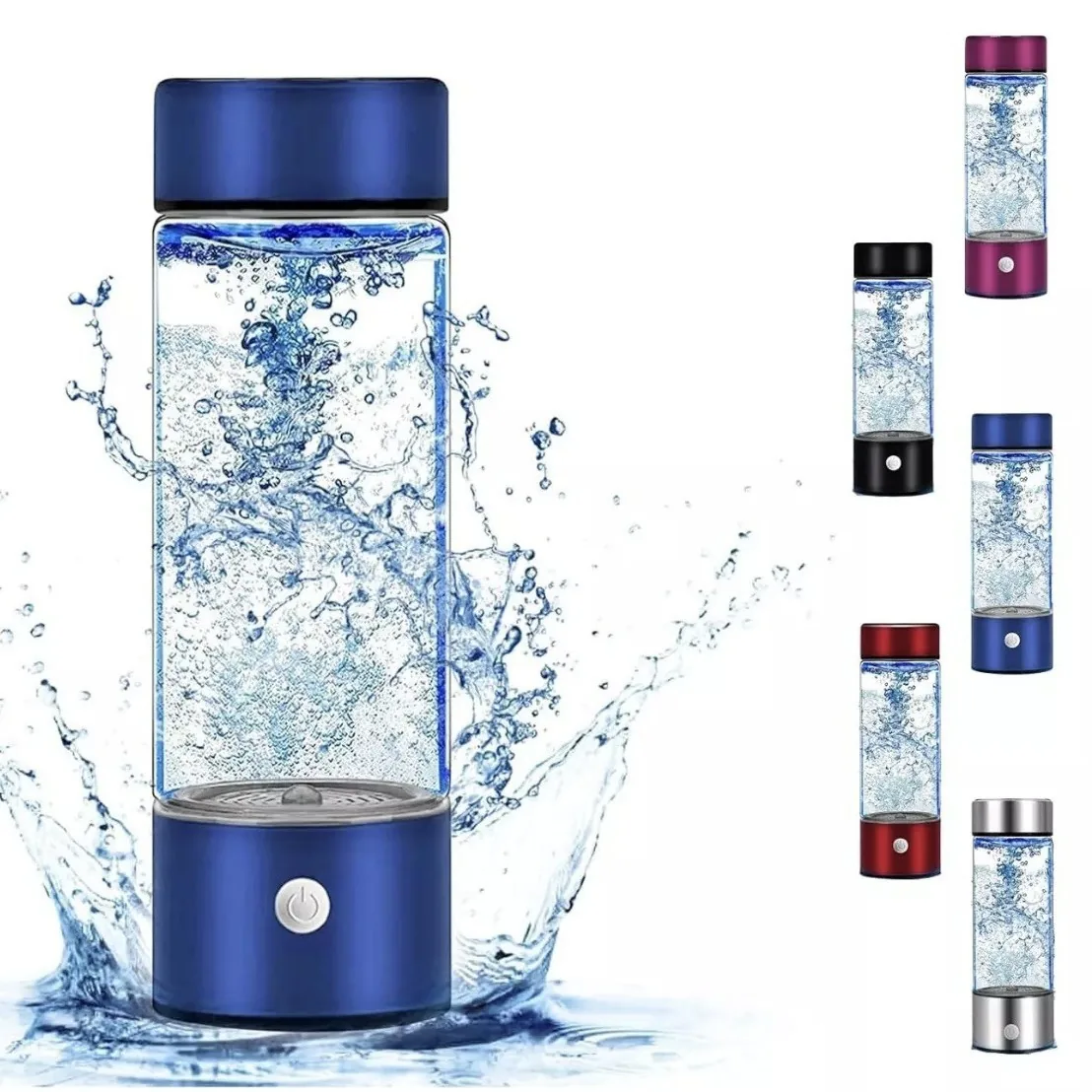
Private-label packaging for a rechargeable hydrogen water bottle has to do more than look attractive. It must protect a water-contact product, identify the correct model, communicate safe use, support the selected sales channel, and travel with a lithium battery through an increasingly controlled logistics network.
Many launch delays begin because packaging and shipping documentation are treated as final-stage tasks. A better process addresses them while the sample and commercial specification are still being approved.
Start With the Exact Shippable Configuration
Define what will actually be placed in the retail box:
- Bottle and exact model number
- Installed battery type and rating
- Charging cable
- Adapter, if included
- Accessories and replacement parts
- User manual and warranty information
- Retail packaging and protective inserts
Changing an adapter, battery, accessory, or packaging structure can change the documents, labels, cost, carton dimensions, or shipping treatment. The quotation, product sheet, manual, and shipping records should describe the same configuration.
Understand What UN 38.3 Does and Does Not Mean

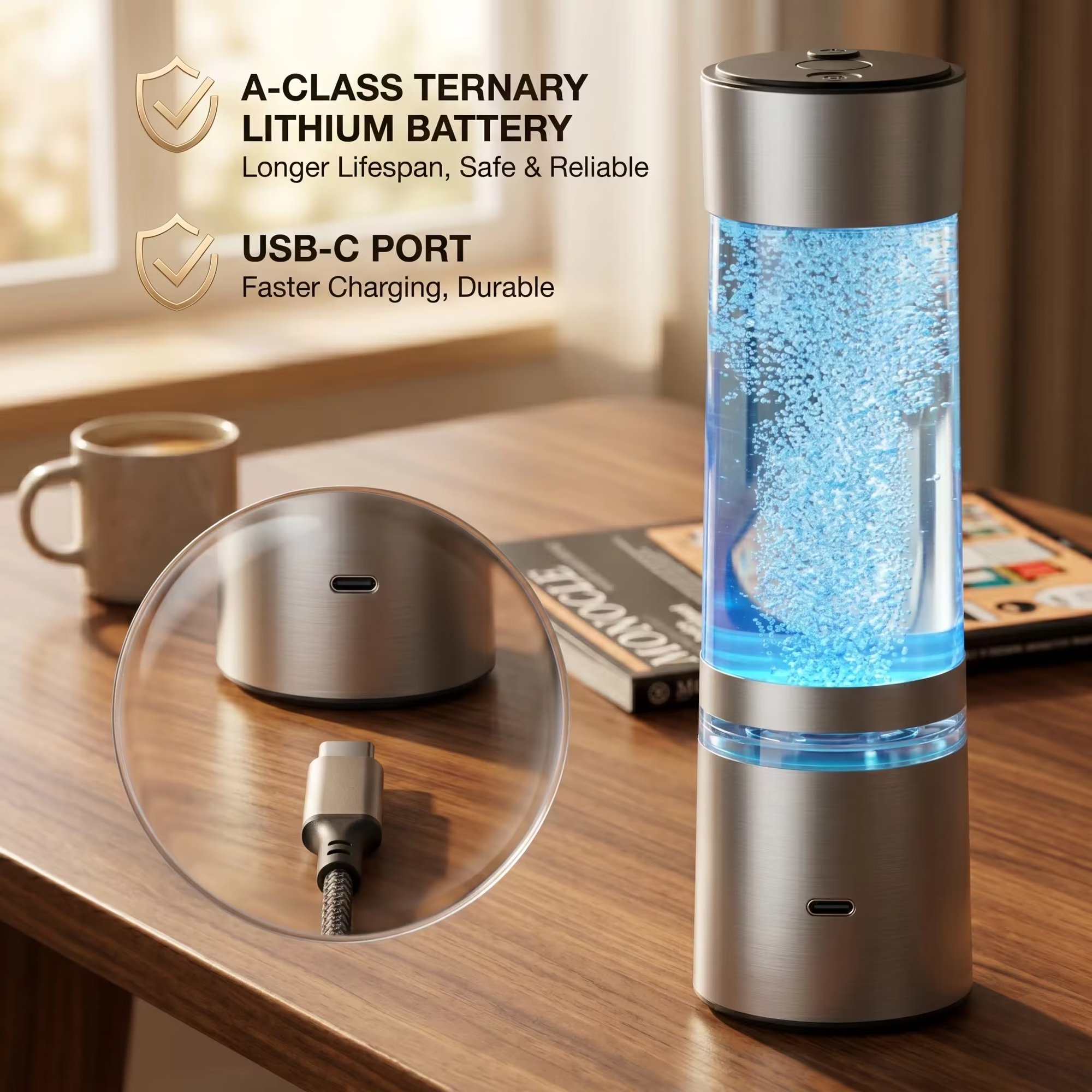
Lithium cells and batteries are generally subject to the UN Manual of Tests and Criteria, Part III, subsection 38.3, before transport. The manufacturer or distributor should be able to provide the applicable test summary for the cell or battery.
UN 38.3 is a transport testing framework, not a general consumer-product quality badge. A graphic that says "UN 38.3 certified" does not by itself establish that the document applies to the battery installed in the quoted product.
Review identifiers, manufacturer information, battery type, report or test-summary references, dates, and configuration. Ask how a component substitution would be controlled and whether a new or updated record would be needed.
The finished shipment may be classified as lithium-ion batteries contained in equipment, packed with equipment, or another applicable category depending on the actual configuration. The shipper and logistics provider should determine the correct current classification, marking, documentation, state-of-charge requirements, packaging instructions, and quantity limits.
Do Not Hard-Code Last Year’s Air-Freight Rules
The International Air Transport Association updates its Dangerous Goods Regulations and battery guidance. Requirements can differ by battery configuration, watt-hour rating, shipment quantity, carrier, and route. Airlines and express carriers may apply conditions beyond the regulatory baseline.
For every shipment, confirm current requirements with a competent freight forwarder or dangerous-goods specialist. Do not rely solely on a previous shipment, a supplier’s generic declaration, or a marketplace forum post.
The packaging team should keep the following available for logistics review:
- Battery specification and watt-hour calculation
- Applicable UN 38.3 test summary
- Safety data or other carrier-requested records, where relevant
- Product and battery photographs
- Packing configuration
- Inner and outer carton quantities
- Carton dimensions and gross weight
- Shipper and consignee information
Design Packaging Around Real Handling
The retail box should prevent the product from moving, protect the charging port and controls, and keep accessories from scratching or striking the bottle. The product should not be packed wet, partially filled, or in a condition that can activate unintentionally.
Evaluate the complete pack, not only the empty box. A useful packaging test records:
- Product orientation
- Insert material and fit
- Accessory position
- Carton closure method
- Drop or handling conditions
- Product, box, and insert condition after testing
- Any activation, leakage, deformation, or cosmetic damage
The selected test should reflect the expected distribution channel. Parcel delivery, palletized distributor shipments, and retail replenishment do not expose packaging to identical conditions.
Treat the Manual and Label as Controlled Components
The user manual should match the exact model and explain filling, supported water conditions, cycle selection, charging, cleaning, storage, warnings, and troubleshooting. Avoid copying instructions from a visually similar product.
Before printing, review:
- Model name and electrical information
- Manufacturer, importer, or responsible-party details where required
- Battery and disposal information where applicable
- Charging instructions
- Water-use limitations
- Cleaning restrictions
- Warning language
- Warranty contact path
- Country of origin marking
- Barcode and lot-code areas
Packaging artwork should have a version number, approval date, and named approver. The supplier should not revise required text or substitute components without a controlled review.
Keep Product Claims Out of the Danger Zone
Packaging space is often used for the strongest marketing claims, which also makes it a compliance risk. Product-function statements should be supported for the exact model and test method. Health, disease, anti-aging, detox, pain-relief, and treatment claims require specialized legal and scientific review and may be inappropriate.
Avoid turning a document logo into a broad claim. Terms such as "FDA certified," "medical grade," "fully approved," or "guaranteed concentration" should not be printed unless the exact legal meaning, product scope, and evidence have been verified for the target market.
It is usually safer to describe the product type, materials, capacity, operating instructions, model-specific test availability, warranty, and private-label features accurately.
Plan for European Packaging and Battery Obligations Early
Brands selling into the European Union should review the EU Batteries Regulation, Regulation (EU) 2023/1542, and the Packaging and Packaging Waste Regulation, Regulation (EU) 2025/40, together with applicable national extended-producer-responsibility requirements.
The obligations and transition dates depend on the product, battery, packaging, economic-operator role, member state, and date of placement on the market. They may affect labeling, documentation, registration, reporting, take-back, packaging design, and supplier-data requirements.
These requirements should be reviewed by qualified compliance support. The practical sourcing lesson is to collect battery, material, packaging-weight, and economic-operator information before artwork is finalized.
Build a Packaging Data File
For each model and market, maintain a controlled folder containing:
- Approved product specification
- Battery specification and test summary
- Water-contact material information
- Available model-specific compliance records
- Packaging dielines and artwork
- Manual source file and translations
- Label specifications
- Retail-pack and master-carton photographs
- Packaging material and weight breakdown
- Carton dimensions, quantity, and gross weight
- Artwork and document version history
This file reduces repeated questions between the brand, supplier, designer, freight forwarder, marketplace, and compliance reviewer.
Approve Packaging Before Mass Printing
Request a complete pre-production packaging sample containing the intended product, accessories, labels, and manual. Check fit, readability, color, barcode scanning, warnings, model references, and carton markings.
Mass printing should begin only after the physical sample and final digital artwork are approved. When a change is required, update the version record and confirm whether existing inventory can still be used.
Packaging Is Part of Supply-Chain Quality
A successful private-label launch depends on alignment. The product, battery record, manual, artwork, carton data, marketplace listing, and freight documents must all describe the same item.
When packaging is managed as a controlled product component instead of a decorative afterthought, brands reduce avoidable shipment holds, relabeling, damage, listing discrepancies, and customer confusion.
Shipment Configuration Matrix
| Configuration | Record | Confirm before booking |
|---|---|---|
| Battery installed in equipment | Battery model, chemistry, voltage, Ah and Wh | Current mode, carrier, packing, marks, labels, documents, and quantity limits |
| Battery packed with equipment | Separate battery quantity and protection | Whether the planned instruction permits the configuration |
| Spare batteries | Individual protection and count | Additional restrictions and carrier acceptance |
| Power adapter included | Model, ratings, plug, reports, packaging position | Destination compatibility and test scope |
| Retail and master cartons | Dimensions, weights, orientation, cushioning, labels | Final packed sample and transport test plan |
UN 38.3 Document Match
Check that the battery manufacturer, model, chemistry, voltage, capacity, watt-hours, and physical battery installed in the product match the transport file. Keep the test-summary information and supplier contact details available to the shipper. A report for a similar battery or a matching capacity with a different model is not automatically interchangeable.
2026 Shipment Review Gate
IATA and carrier requirements can change between editions and routes. Before each shipment, ask the freight forwarder or dangerous-goods specialist to confirm the current rule set, packing instruction, state-of-charge limits where applicable, inner protection, package testing, marks, labels, documentation, overpack handling, quantity limits, and carrier variations.
Record the rule edition and approval date in the shipping file. Recheck when the battery, product, quantity, packaging, mode, carrier, route, or destination changes.
Packaging Approval Checklist
- Product cannot activate accidentally during distribution.
- Charging port, glass or plastic vessel, cap, base, and accessories are protected from movement and impact.
- Manual, warnings, labels, barcode, importer information, and carton marks match the destination file.
- Retail-box and master-carton counts, dimensions, net weights, and gross weights are measured from the final packed sample.
- Artwork revisions and component changes cannot enter production without written approval.
References
- IATA battery guidance: https://www.iata.org/en/programs/cargo/dgr/lithium-batteries/
- United Nations Manual of Tests and Criteria: https://unece.org/transport/dangerous-goods/manual-tests-and-criteria-rev8-2023
- Regulation (EU) 2023/1542 concerning batteries and waste batteries: https://eur-lex.europa.eu/eli/reg/2023/1542/oj
- Regulation (EU) 2025/40 on packaging and packaging waste: https://eur-lex.europa.eu/eli/reg/2025/40/oj
Author Bio
The PHYFLOW Editorial Team supports OEM/ODM sourcing projects for hydrogen water bottles and related hydrogen-generation products. Its work focuses on product specifications, sample evaluation, documentation, packaging, and buyer-supplier communication. This article provides sourcing information, not legal, regulatory, or dangerous-goods advice.
Buyer Resources and Related Guides
- Compare PHYFLOW hydrogen water bottle models
- How to choose an OEM hydrogen water bottle manufacturer
- The OEM Hydrogen Water Bottle Quality-Control Checklist Most Buyers Miss
- Why Water Temperature Can Change a Dissolved-Hydrogen Test Result
- SPE/PEM Hydrogen Water Bottle Failure Modes: A Buyer’s Test Plan
- Hydrogen water bottle RFQ template
Discuss Your Hydrogen Water Bottle Project
Share your target market, expected quantity, preferred model, branding scope, packaging requirements, and document needs with PHYFLOW.