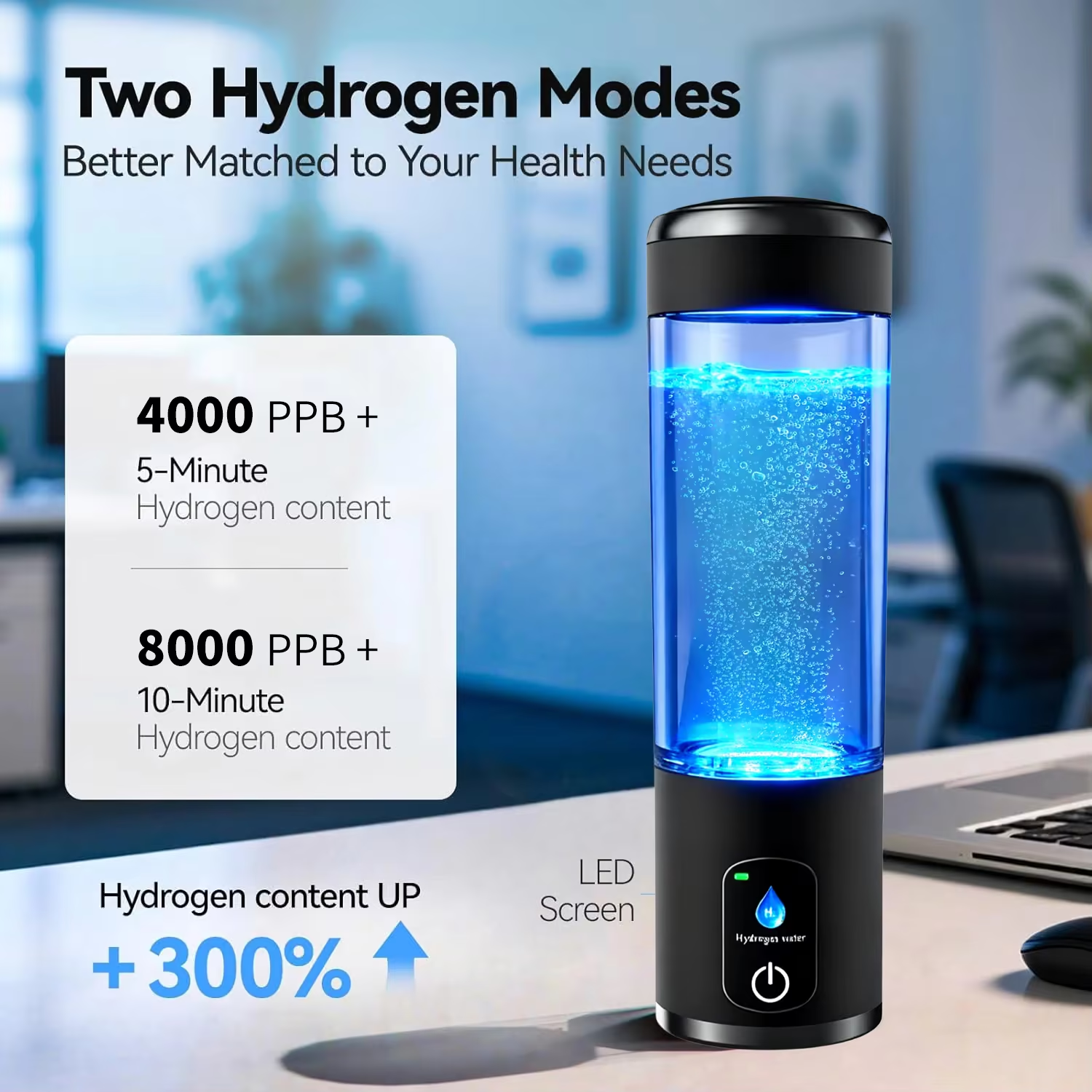

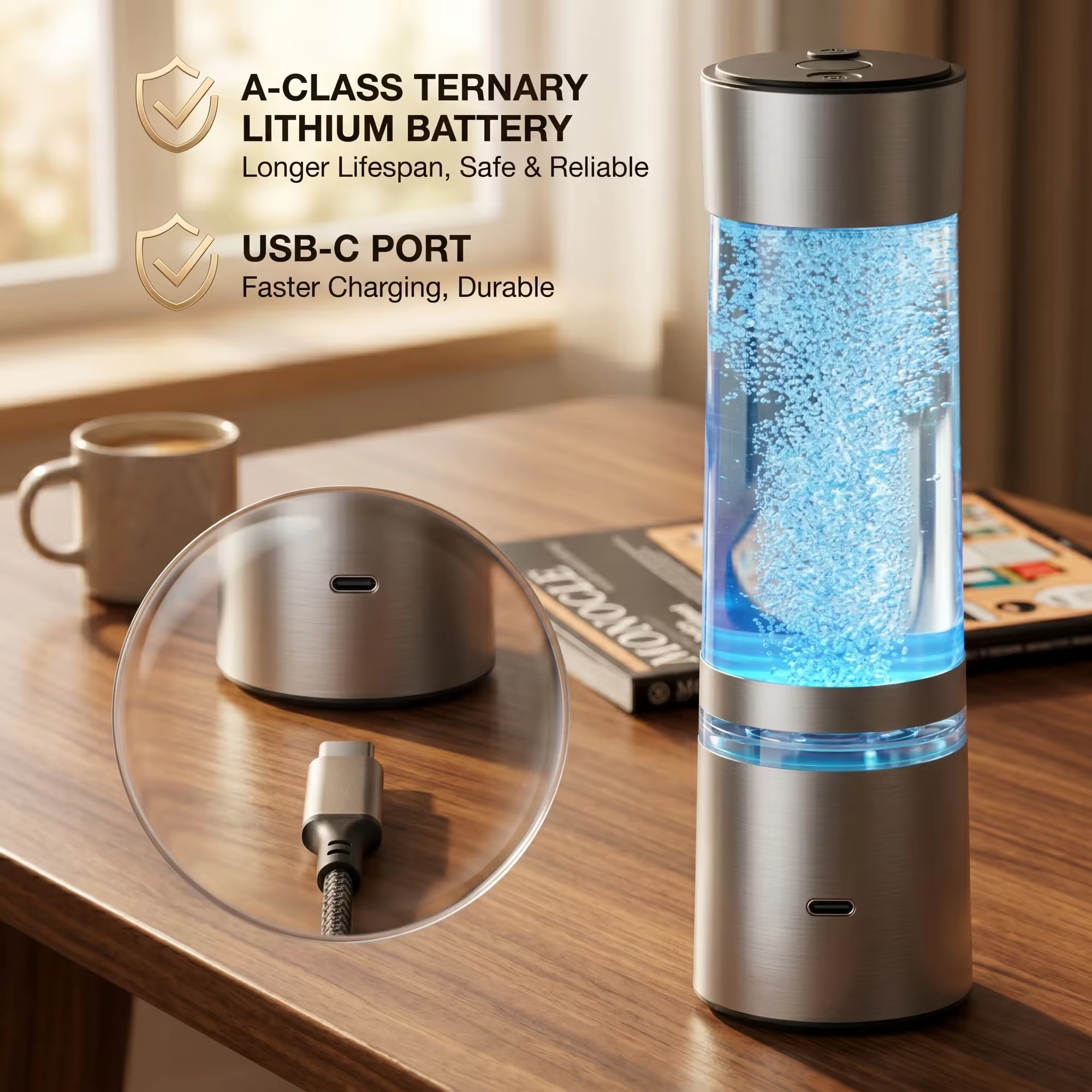
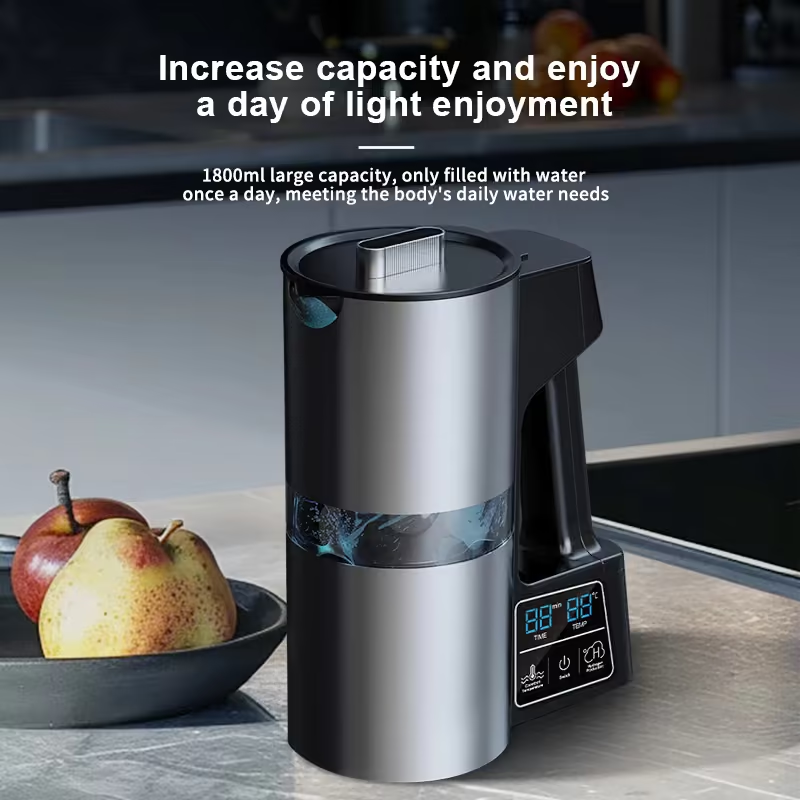
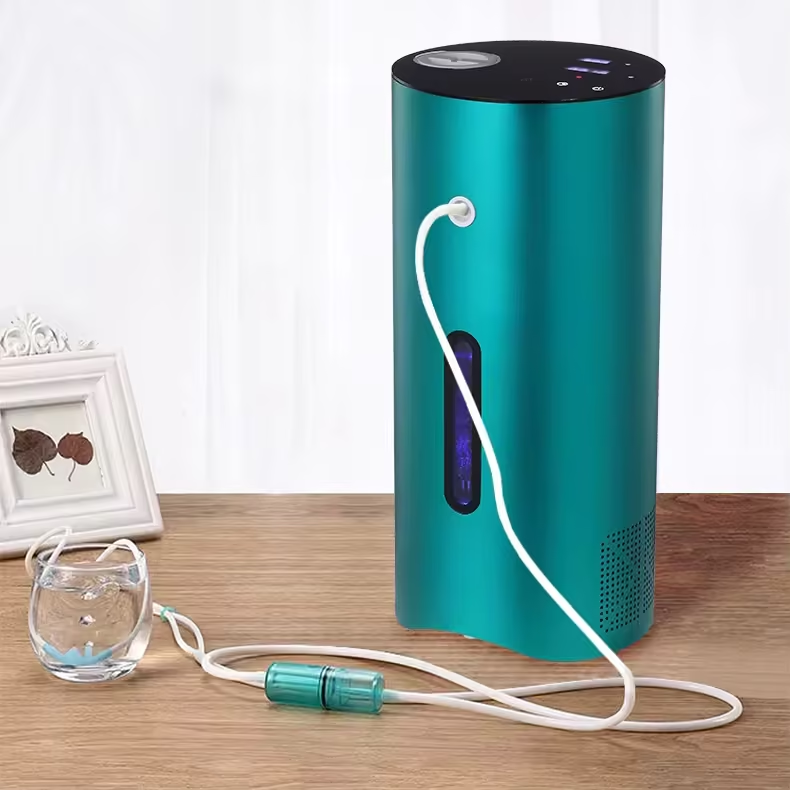






SPE/PEM is often presented as a single feature on a hydrogen water bottle product page. For a buyer, however, the more important question is how the complete product manages water, gas, seals, current, heat, charging, controls, and component consistency over repeated use.
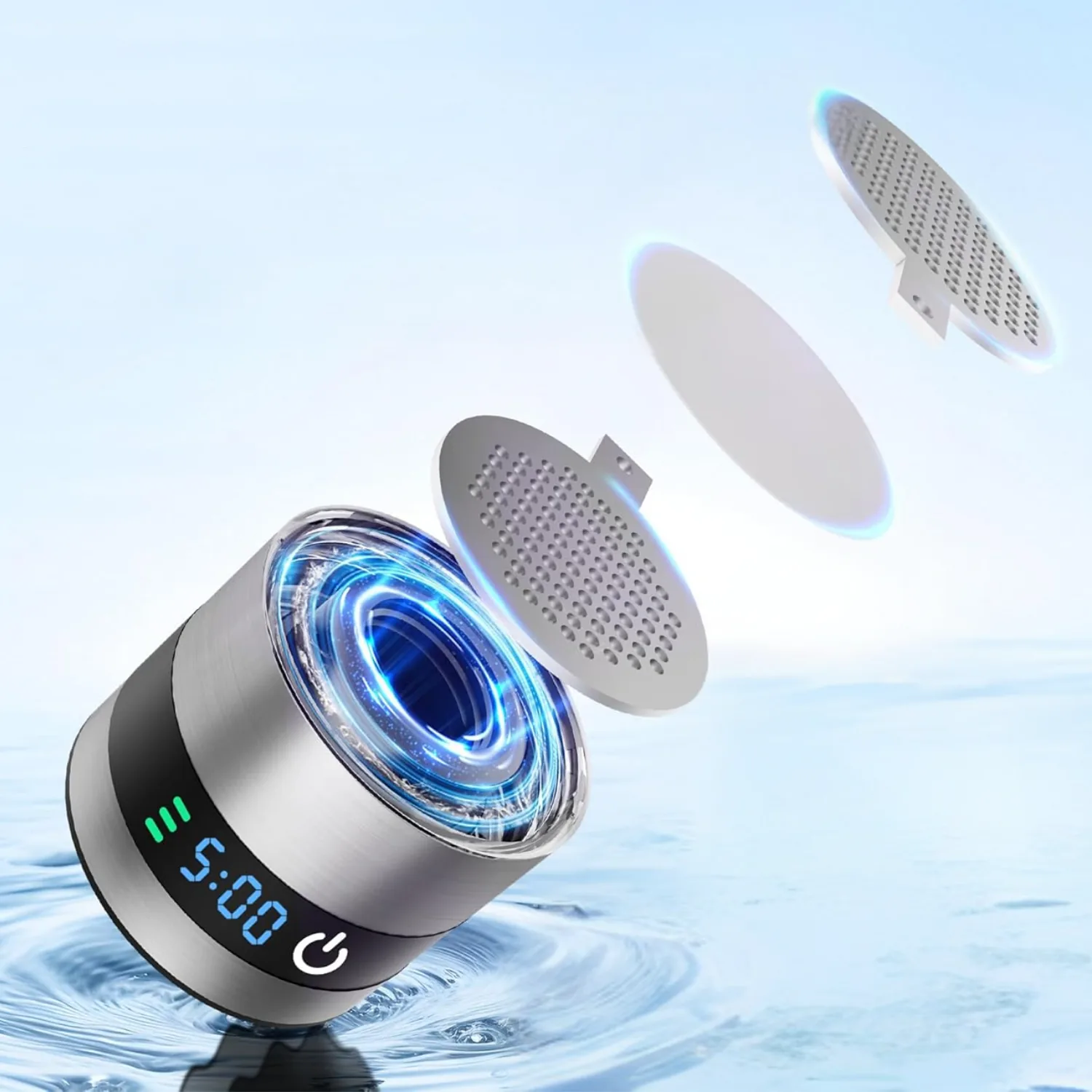
Solid polymer electrolyte and proton exchange membrane technologies are used in electrolysis systems to separate reaction products and support controlled ion transport. The U.S. Department of Energy describes PEM electrolysis as one of the main water-electrolysis pathways. A portable consumer bottle is much smaller than an industrial electrolyzer, but several engineering disciplines remain relevant: materials, water quality, sealing, gas management, power control, and durability.
This article does not diagnose any particular model. It gives buyers a structured way to identify warning signs and ask better questions without opening or modifying a sealed product.
1. Leakage and Seal Degradation
A bottle contains several potential sealing interfaces: the cap, threads, gaskets, vessel connection, electrolysis-base assembly, and any designed vent or pressure-management path. A seal can perform correctly when new but become unreliable after repeated assembly, cleaning, temperature changes, or transport.
Buyer-observable warning signs include:
- Moisture around the base or charging area
- Intermittent leakage after a generation cycle
- A cap or thread that no longer closes consistently
- Gasket deformation, odor, discoloration, or movement
- Leakage only when the bottle is inverted or carried sideways
Test filled samples upright, inverted, and on their side under defined conditions. Repeat the check after several operating cycles and after a controlled transport simulation. Do not block a designed vent or intentionally overpressurize the product.
Ask the supplier how seals are specified, inspected, assembled, and controlled between batches.
2. Water-Quality Sensitivity and Deposits
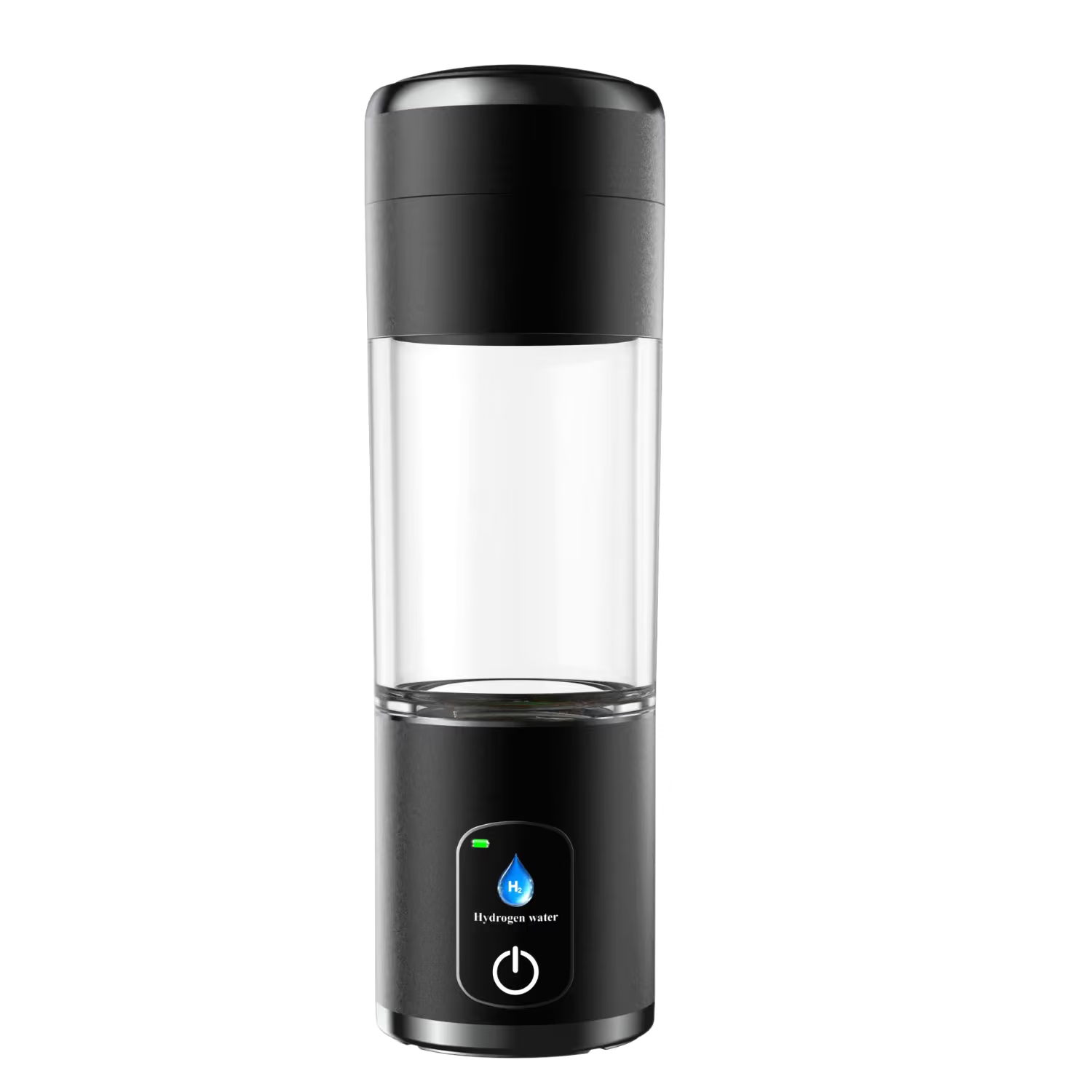
Water composition can affect electrolysis equipment. Minerals, dissolved solids, cleaning chemicals, and unsupported additives may contribute to deposits, altered conductivity, contamination, or component stress. The effect depends on the product design and the supplier’s water-use instructions.
Warning signs may include new residue, visible deposits, changing cycle behavior, unusual odor, reduced repeatability, or cleaning requirements that are not explained in the manual.
Buyers should test with a documented water source that falls within the supplier’s instructions. Do not add salt, electrolyte powders, flavoring, or cleaning chemicals unless the exact model instructions permit them. Ask the supplier to define supported and unsupported water conditions rather than using the vague instruction "use clean water."
3. Declining or Inconsistent Output
A change in measured dissolved hydrogen can come from the product, test method, water, temperature, sampling delay, instrument, or battery condition. It should not immediately be attributed to membrane or electrode failure.
Use a controlled protocol before drawing a conclusion. Keep water source, fill volume, starting temperature, charging condition, cycle, sampling delay, container handling, and measurement method consistent. Record individual repetitions and compare the observed range over time.
If readings drift, ask the supplier to review electrical behavior, component condition, assembly records, and the test procedure. A buyer should not disassemble the electrolysis module or attempt a gas-separation diagnosis without qualified equipment and safety controls.
4. Electrical and Thermal Drift
Portable bottles depend on a battery, charging circuit, control board, connections, and an electrolysis load. Problems in this system may appear as a cycle that ends early, inconsistent display behavior, failure to start, unusual heat, unexpected shutdown, charging difficulty, or performance that changes with battery level.
During sample evaluation, record:
- Initial battery or charging state
- Cycle start and stop behavior
- Actual cycle duration
- Surface temperature observations
- Charging time
- Operation after a full charge
- Operation as the battery level declines
- Error indicators or resets
Stop testing a unit that becomes abnormally hot, swells, leaks into an electrical area, smells unusual, or shows battery damage. Follow the supplier’s safety instructions and use qualified support for evaluation.
5. Gas and Liquid Management Problems
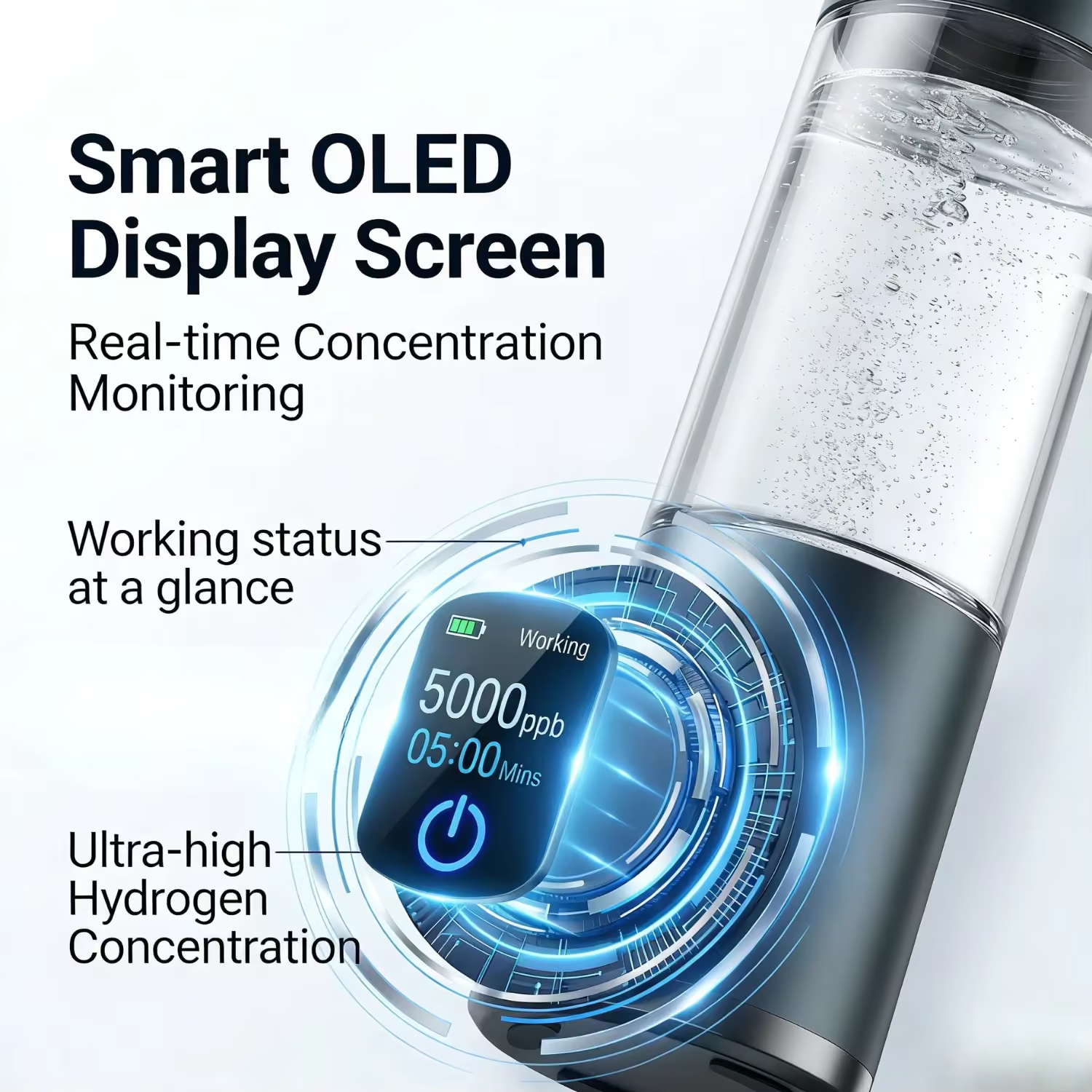
The visible presence of bubbles does not prove correct gas separation or a specific dissolved concentration. Product architecture may include a membrane, gas-liquid paths, vents, valves, pressure-management features, or other components that are not visible to the user.
Buyer-observable warning signs can include abnormal noise, unexpected pressure behavior, liquid entering a path that should remain dry, leakage near a vent, a sudden change in bubble pattern, or inconsistent cycle completion.
Do not seal vents, modify pressure paths, ignite collected gas, or use smell as a gas-identification method. Questions about gas crossover, composition, pressure, and internal separation should be answered through supplier engineering records or qualified laboratory testing.
6. Electrode, Membrane, and Assembly Consistency
The buyer may not be able to inspect an electrode coating or membrane without destroying the product, but supply-chain controls can still be evaluated.
Ask:
- Are electrode and membrane specifications fixed for this model?
- Are component suppliers consistent between sample and bulk production?
- Which substitutions require buyer approval?
- How are incoming components identified and inspected?
- Is there a batch or lot record for the electrolysis assembly?
- What end-of-line function test is performed?
- Are failed assemblies analyzed and corrective actions recorded?
The objective is not to obtain confidential manufacturing details. It is to confirm that the approved product configuration is defined and changes are controlled.
7. Firmware, Timing, and User-Interface Errors
Some performance complaints are control problems rather than electrochemistry problems. A button, display, timer, contact, or firmware setting may cause the wrong cycle to run or stop.
Test every user-selectable mode described in the manual. Record button response, displayed status, cycle time, end-of-cycle indication, low-battery behavior, and recovery after charging. Confirm that the manual and packaging describe the actual interface on the production sample.
For a private-label project, establish whether the control behavior is standard or customized and how any firmware or component revision will be documented.
8. Cleaning and Maintenance Damage
A product can be damaged by aggressive descaling, immersion of electrical components, abrasive tools, dishwashers, boiling water, or chemicals that are incompatible with seals and plastics.
The manual should define routine cleaning, prohibited methods, storage, drying, and the response to visible deposits. Buyers should evaluate whether the instructions are realistic for the intended customer. A requirement that is technically correct but difficult to follow can still lead to high misuse and return rates.
A Non-Destructive Buyer Test Plan
Use the following sequence for supplier samples:
Step 1: Record the Configuration
Photograph the product, packaging, label, charging components, accessories, and manual. Record the model number, sample date, and supplier.
Step 2: Inspect Before Operation
Check surfaces, cap, threads, seals, base assembly, charging port, water-contact areas, and packaging condition.
Step 3: Run Repeated Standard Cycles
Use a documented water source, fill volume, starting temperature, battery condition, and cycle. Record timing, noise, heat, display behavior, leakage, odor, and errors. The number of cycles should reflect the buyer’s evaluation objective and should be agreed before comparing suppliers.
Step 4: Perform Controlled Leak and Handling Checks
Evaluate upright, inverted, and side placement as appropriate. Add a repeatable transport or handling simulation based on the intended sales channel.
Step 5: Measure Output Consistently
If dissolved hydrogen is measured, document the method, calibration, water, temperature, cycle, delay, transfer, repetitions, and individual readings. Do not use ORP or bubble appearance as a direct concentration value.
Step 6: Review Charging and Low-Battery Behavior
Observe charging fit, time, heat, full-charge operation, declining-battery operation, and error recovery.
Step 7: Review Documents and Change Control
Confirm that product sheets, test records, battery documents, material statements, manual, quotation, and packaging identify the same model and configuration.
Step 8: Classify the Decision
Use one of four outcomes:
- Approve for a controlled pilot order
- Request corrective action and a second sample
- Hold until documents or test methods are clarified
- Reject because the supplier cannot explain configuration, repeatability, or defect handling
What a Good Supplier Response Looks Like
A credible supplier does not need to claim that failure is impossible. It should be able to identify the exact model, explain the test method, define supported water and cleaning conditions, provide applicable records, disclose relevant changes, investigate a failed sample, and propose corrective action.
For buyers, that discipline is more valuable than a large performance number without a repeatable procedure behind it.
What the SPE/PEM Label Does and Does Not Prove
| Supplier statement | Evidence to request | Decision limit |
|---|---|---|
| Uses SPE/PEM | Model-specific specification and assembly description | The acronym alone does not establish output, durability, or gas management |
| High dissolved hydrogen | Method, conditions, individual readings, and report scope | Do not compare unmatched tests |
| Separates gases | Flow-path explanation, vent design, and model-specific evidence | Do not infer performance from a generic diagram |
| Long service life | Cycle test plan, acceptance criteria, and retained results | A warranty period is not a durability test |
| Safe for multiple water types | Written water-use and cleaning instructions | Do not test unsupported additives or cleaning chemicals |
Importer Verification File
Keep the following documents under the exact model and revision being ordered:
- Dated product specification and bill-of-materials reference or controlled configuration list.
- Electrolysis-cell description, electrode material statement, gas-flow explanation, and supported-water instructions.
- Sample test record covering leakage, repeated operation, heat, charging, controls, cleaning, and measured output.
- Battery identification and transport documentation for the fitted battery.
- Artwork, manual, warnings, packaging specification, approved sample, and deviation list.
- Written process for material, firmware, battery, cell, seal, or supplier changes.
Questions to Put in the RFQ
- Which exact cell, electrode, membrane, battery, firmware, and seal configuration is included in this quotation?
- Where do oxygen and other generated gases go during the cycle?
- Which water types and cleaning methods are supported or prohibited?
- Which tests are run on every unit, every lot, and only during qualification?
- How will we be notified and asked to approve a component or process change?
References
- U.S. Department of Energy, Hydrogen Production: Electrolysis: https://www.energy.gov/cmei/fuels/hydrogen-production-electrolysis
- NIST Chemistry WebBook, Hydrogen: https://webbook.nist.gov/cgi/cbook.cgi?ID=C1333740&Mask=10
Author Bio
The PHYFLOW Editorial Team supports OEM/ODM sourcing projects for hydrogen water bottles and related hydrogen-generation products. Its work focuses on product specifications, sample evaluation, documentation, packaging, and buyer-supplier communication. This article provides sourcing information, not medical, engineering, or laboratory advice.
Buyer Resources and Related Guides
- Compare PHYFLOW hydrogen water bottle models
- How to choose an OEM hydrogen water bottle manufacturer
- The OEM Hydrogen Water Bottle Quality-Control Checklist Most Buyers Miss
- Why Water Temperature Can Change a Dissolved-Hydrogen Test Result
- A Private-Label Packaging and Battery-Shipping Guide for Hydrogen Water Bottles
- Hydrogen water bottle RFQ template
Discuss Your Hydrogen Water Bottle Project
Share your target market, expected quantity, preferred model, branding scope, packaging requirements, and document needs with PHYFLOW.