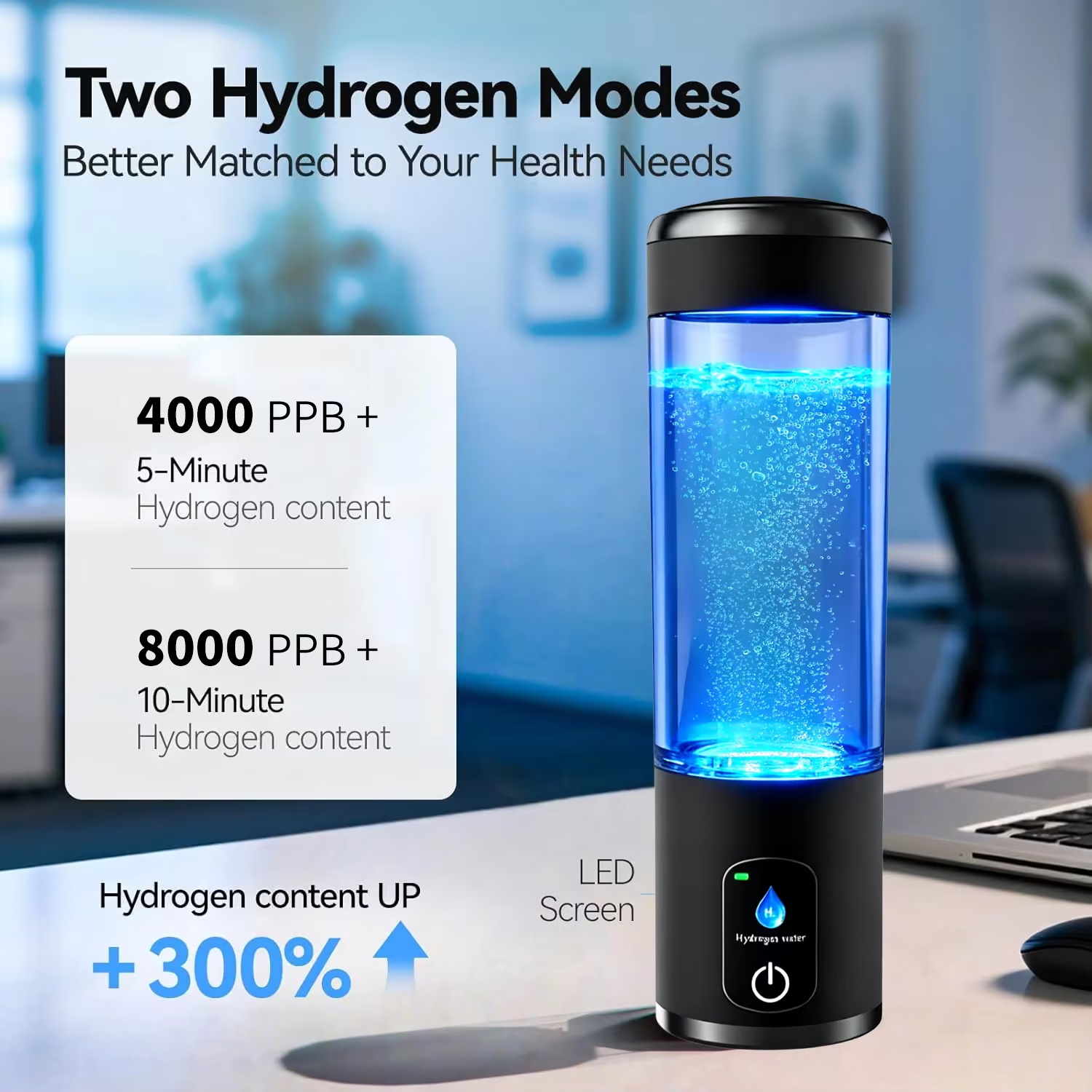


Selecting an OEM hydrogen water bottle is not simply a matter of comparing a quoted hydrogen concentration, unit price, and logo option. A bottle combines water-contact materials, an electrolysis assembly, seals, electronics, a rechargeable battery, packaging, and user instructions. A weakness in any one of those areas can become a return, compliance, or reputation problem after launch.
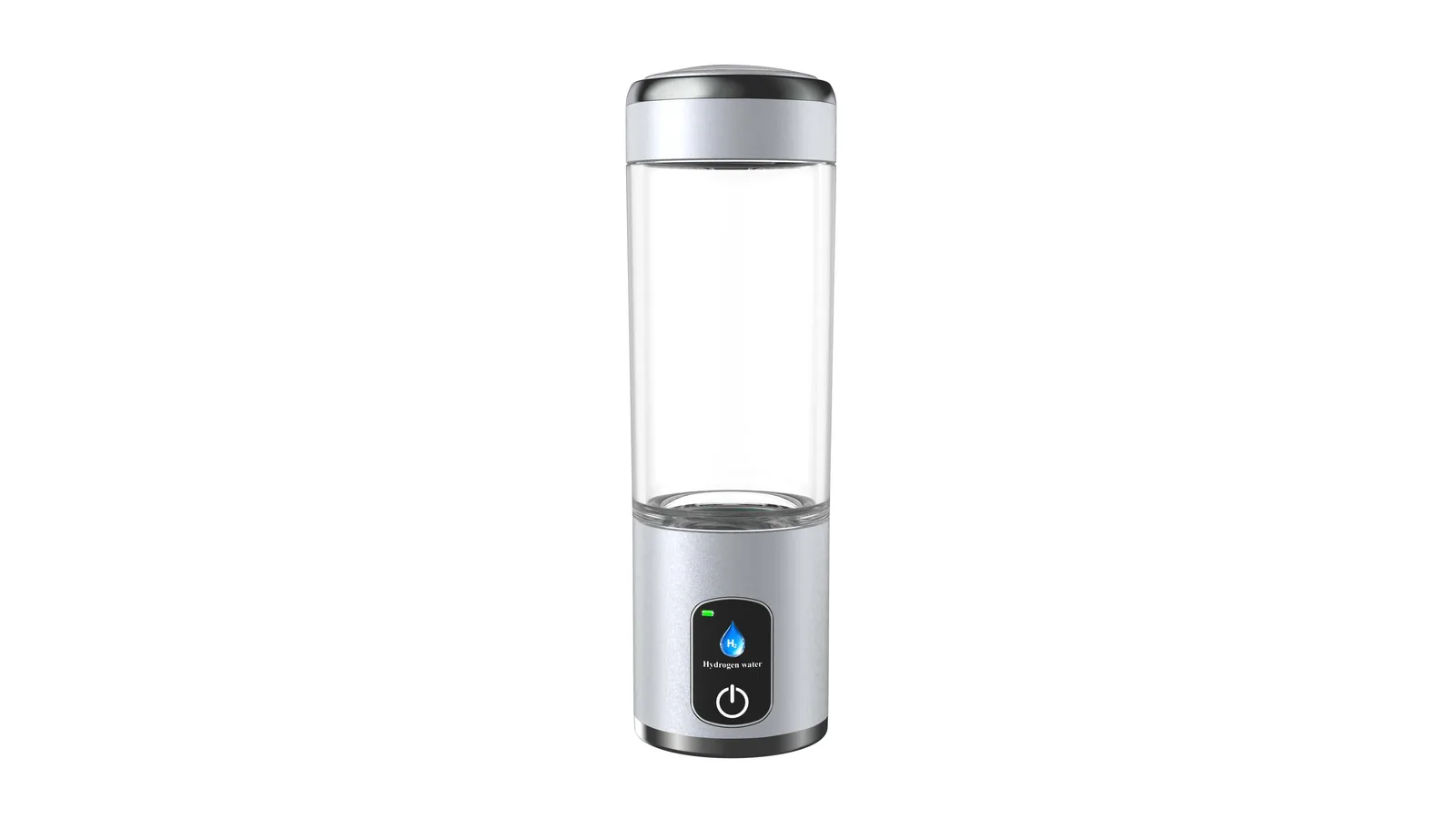
The most reliable sourcing process treats quality control as a chain of decisions that begins before the first sample is ordered and continues through production, shipment, and corrective action. The following checklist gives buyers a practical framework for building that process.
1. Confirm Who Is Supplying the Product
Begin with supplier identity. Record the legal company name, factory address, sales contact, technical contact, main product categories, and whether the company is the manufacturer, a trading company, or a combination of both.
This distinction does not automatically determine quality. A capable trading company may manage a project well, while a factory may still have weak change control. The point is to understand who owns tooling, who controls the bill of materials, who approves production changes, and who is responsible when a defect appears.
Ask the supplier to identify the exact model number in every product sheet, quotation, test document, manual, and packaging file. Similar-looking models may use different cells, seals, batteries, plastics, or control boards. Documents for one model should not be assumed to cover another.
2. Write the Product Requirement Before Comparing Samples
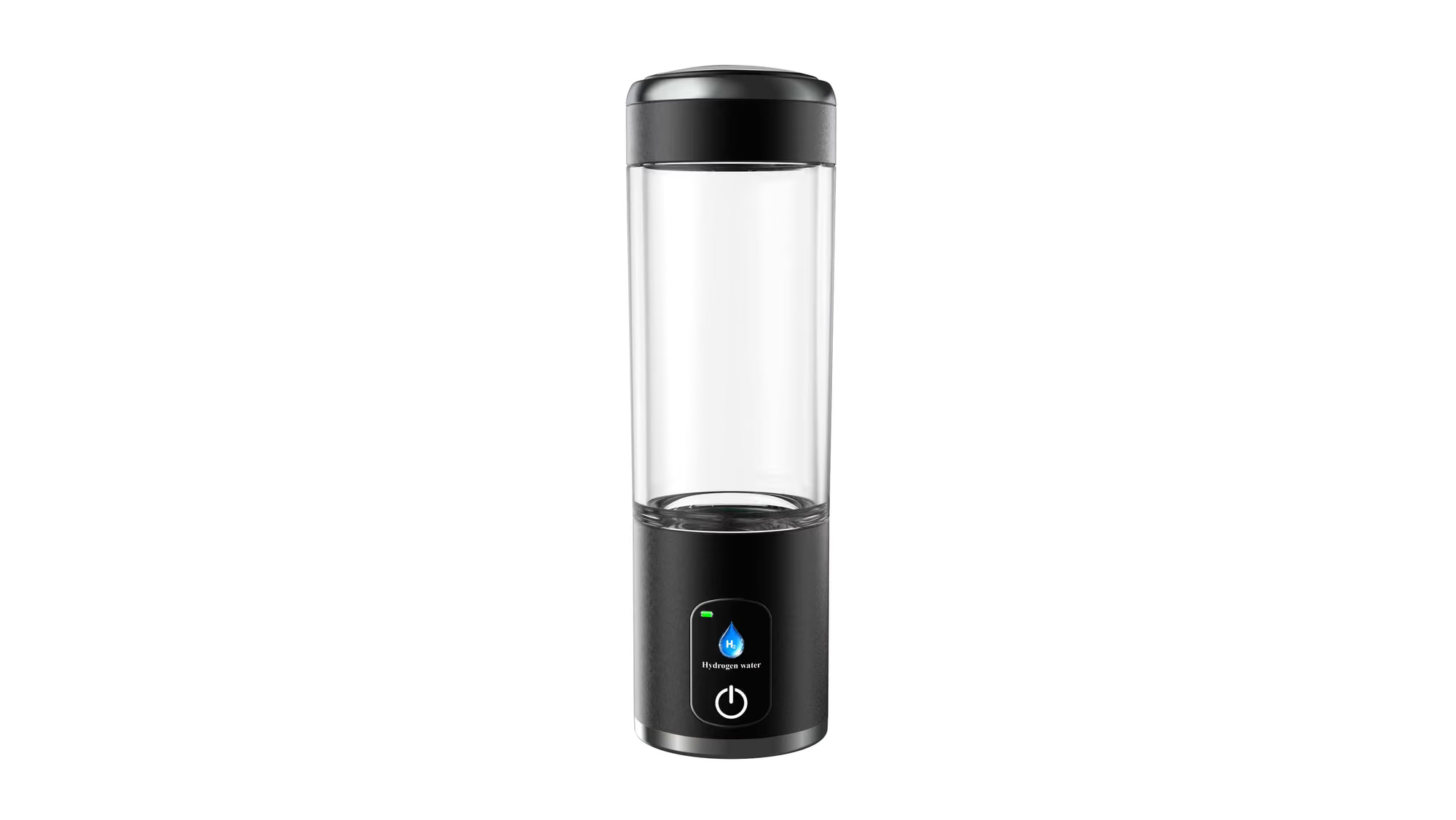
A useful requirement sheet should describe the target market and sales channel as well as the product itself. A bottle intended for a retail shelf may need different packaging, warnings, and barcode placement from one sold through an ecommerce fulfillment center.
At minimum, define:
- Intended country or region of sale
- Bottle capacity and water-contact materials
- Charging interface and whether an adapter is included
- Required generation cycle behavior
- Logo, color, packaging, and manual-language requirements
- Accessories and spare-parts expectations
- Target warranty and defect-handling process
- Documents required for the exact product configuration
Do not begin with a supplier’s marketing sheet and treat it as the specification. The buyer’s requirement should be the reference used to evaluate each supplier.
3. Separate Product Function From Marketing Claims
Hydrogen water products are frequently sold with bold wellness language. A sourcing team should separate product-function verification from consumer health marketing.
For product function, ask what electrolysis technology is used, what test method supports any dissolved-hydrogen figure, when the sample is measured, what water and temperature are used, and whether raw results are available. For consumer-facing claims, obtain qualified regulatory review for the target market.
Avoid accepting broad labels such as "medical grade," "FDA certified," or "highest concentration" without a document that identifies the product, scope, issuing organization, date, and applicable requirement. A logo on a sales image is not a substitute for the underlying record.
4. Establish a Golden Sample and Configuration Record
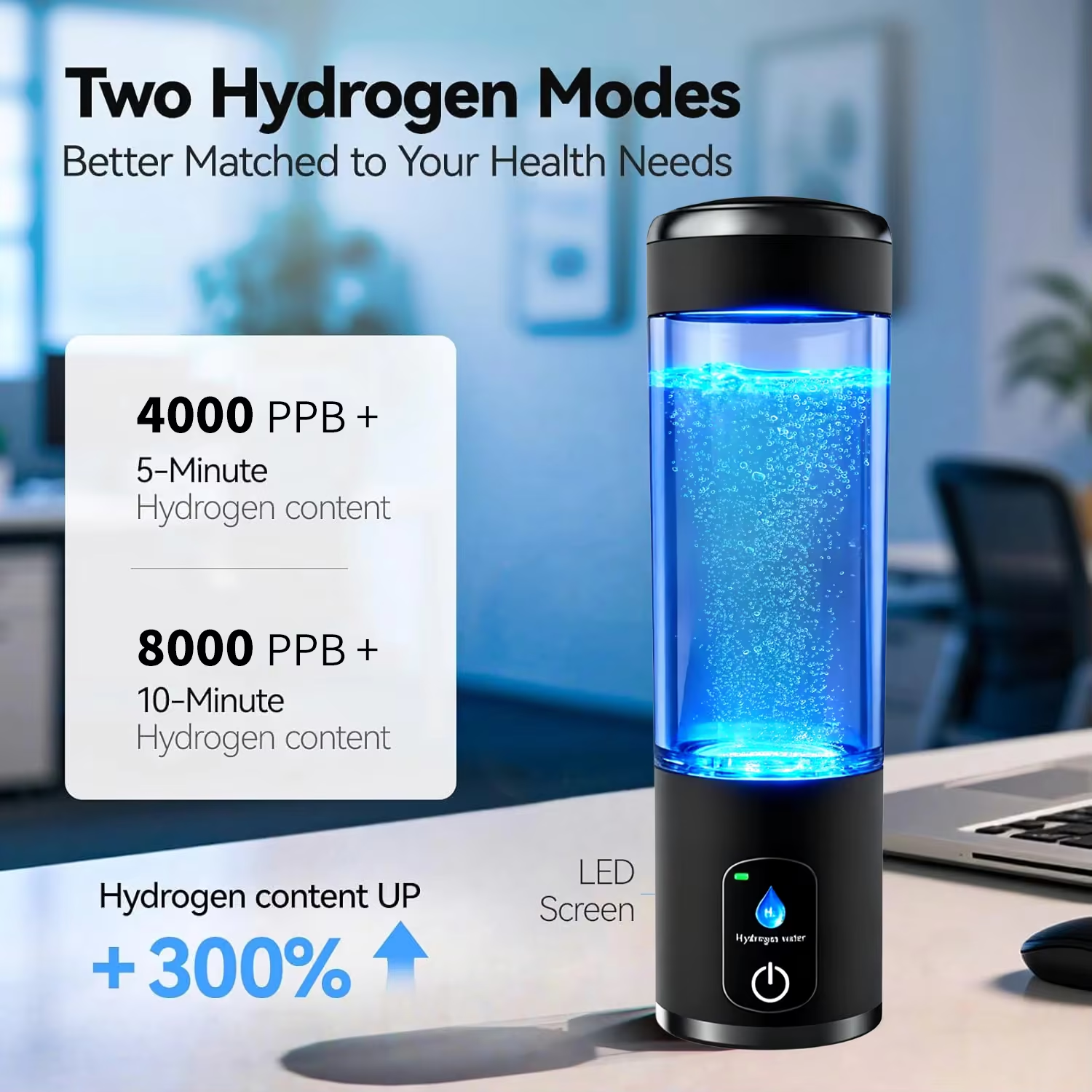
The approved sample should become more than a bottle stored on a shelf. Create a golden-sample record containing photographs, model number, firmware or control behavior where relevant, water-contact materials, battery specification, packaging components, accessories, manual version, labels, and approved artwork.
Ask whether the sample came from normal production or was specially prepared. Before bulk production, confirm that the intended bill of materials matches the approved sample. Any proposed substitution should be disclosed and approved before use.
This step reduces a common sourcing risk: a visually identical bulk product that contains a different component or material from the sample that was tested.
5. Test Operation Under Repeatable Conditions
Run multiple complete cycles using the same water source, fill volume, water temperature, charging state, and timing for every sample. Record cycle duration, display behavior, noise, heat, leakage, abnormal odor, and error behavior.
For dissolved-hydrogen testing, document the instrument or method, sampling procedure, measurement timing, container handling, and number of repetitions. Do not compare a supplier’s internal number with a buyer’s reading unless both tests use aligned conditions.
A useful sample report does not contain only "pass" or "fail." It records the conditions under which the result was produced so the test can be repeated after a production change or customer complaint.
6. Treat Leakage as a System Test
Leakage can originate from the cap, seal, threads, base assembly, pressure-management path, or damage during transport. Test the bottle upright, inverted, on its side, and after a controlled handling or backpack-shake simulation. Inspect it immediately after cycling and again after it has rested.
The test method should reflect the product’s intended use and the supplier’s instructions. It should not introduce conditions the product was never designed to withstand, but it should reproduce foreseeable handling by a customer.
Record even intermittent moisture. A small leak during sample evaluation can become a high return rate when multiplied across a shipment.
7. Review Charging and Battery Details
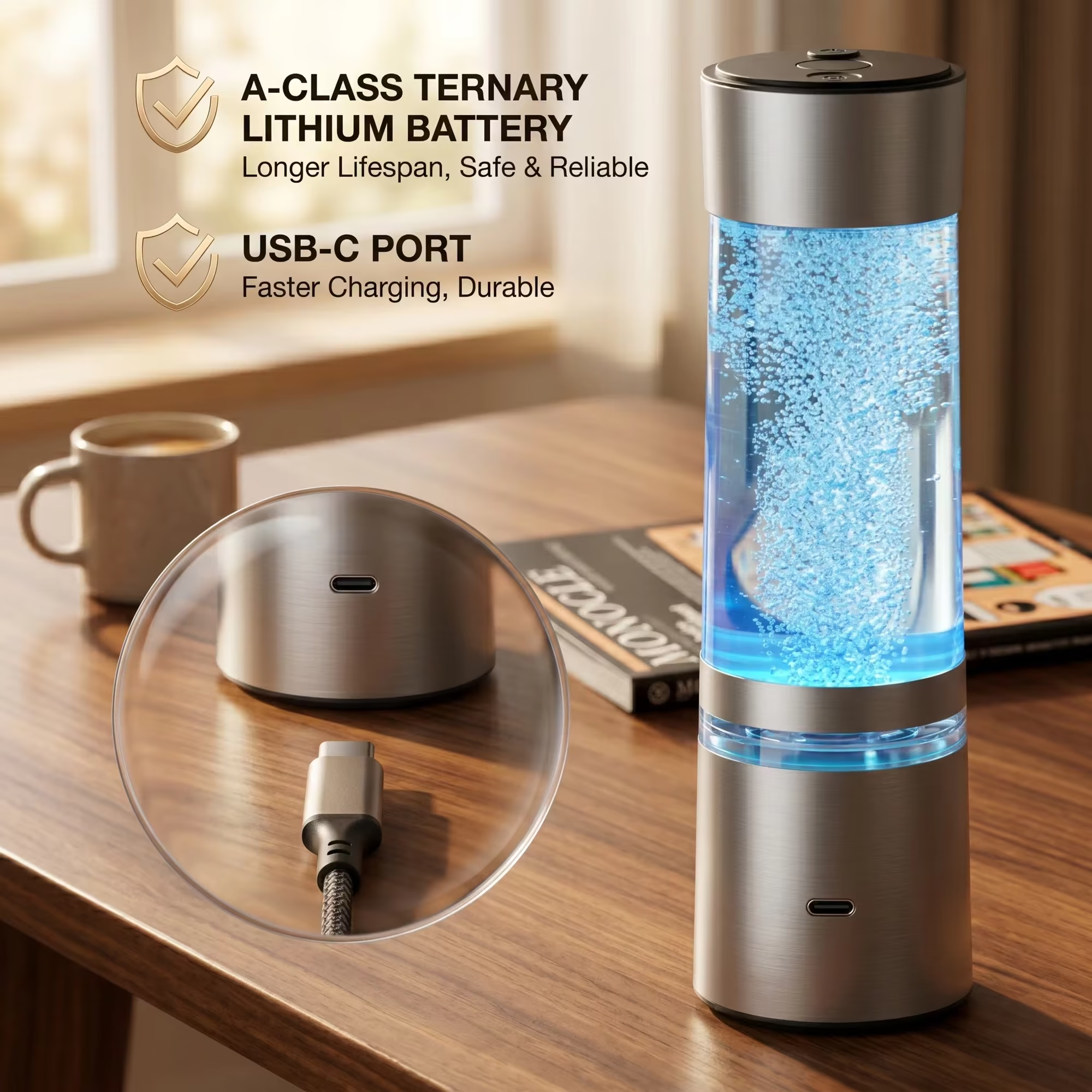
Check charging-port fit, cable quality, charge time, heat during charging, operation after a full charge, and behavior at low battery. Confirm whether the quoted configuration includes an adapter or only a cable.
Request available battery transport and safety documentation for the exact battery and finished-product configuration. The required records depend on battery type, configuration, transport mode, destination, and current rules. Buyers should confirm the final shipping classification with their logistics provider rather than relying on a generic certificate image.
8. Inspect Packaging as Part of the Product
Packaging affects damage rates, listing readiness, and customer trust. Review the retail box, inner support, accessories, warning labels, barcode area, manual, outer carton, and carton markings.
Conduct a handling or drop evaluation based on the buyer’s normal logistics environment. Photograph the condition before and after testing. Confirm that the production packaging uses the same structure and material specification as the approved sample.
For private-label projects, artwork approval should include a version number and date. Spelling, voltage information, disposal symbols, company details, and model references should be reviewed before printing.
9. Define Production Inspection Points
Agree on which characteristics are critical, major, and minor before production. Critical checks may include electrical safety conditions, leakage, damaged battery components, incorrect warnings, or other issues that could create an unacceptable risk. Major and minor categories should reflect function, appearance, packaging, and commercial expectations.
The inspection plan may include incoming-component checks, in-process testing, finished-product cycling, leakage checks, charging checks, artwork verification, and pre-shipment sampling. The sampling method and acceptance criteria should be written into the purchase agreement or quality plan rather than decided after a problem occurs.
10. Require Traceability and Change Control
Ask how the supplier identifies production batches and records component lots, inspection results, rework, and shipment dates. Agree that changes to water-contact materials, electrodes, membranes, seals, batteries, firmware, packaging, or key sub-suppliers require buyer approval when they affect the agreed configuration.
Traceability does not need to be complicated, but it must be usable. When a defect is reported, the supplier and buyer should be able to identify the affected batch, review retained records, and determine whether other shipments are involved.
11. Agree on Corrective Action Before the Order
The warranty statement should explain what evidence is required, how defective units are evaluated, whether replacements or credits are available, who pays freight, and how recurring defects trigger corrective action.
For a significant issue, ask for a structured response covering containment, root cause, corrective action, verification, and prevention. Price negotiation cannot replace this process.
A Better Final Decision Rule
A sample should be approved for bulk only when product function, documentation, packaging, communication, and change-control confidence are all acceptable. A strong laboratory result cannot compensate for poor sealing, incomplete documents, or an undefined defect process.
The goal is not to find a supplier that never experiences a problem. It is to choose one that can define the product, reproduce the approved configuration, disclose changes, provide evidence, and resolve problems systematically.
Author Bio
The PHYFLOW Editorial Team supports OEM/ODM sourcing projects for hydrogen water bottles and related hydrogen-generation products. Its work focuses on product specifications, sample evaluation, documentation, packaging, and buyer-supplier communication. This article provides sourcing information, not medical or legal advice.
Buyer Resources and Related Guides
- Compare PHYFLOW hydrogen water bottle models
- How to choose an OEM hydrogen water bottle manufacturer
- Why Water Temperature Can Change a Dissolved-Hydrogen Test Result
- A Private-Label Packaging and Battery-Shipping Guide for Hydrogen Water Bottles
- SPE/PEM Hydrogen Water Bottle Failure Modes: A Buyer’s Test Plan
- Hydrogen water bottle RFQ template
Discuss Your Hydrogen Water Bottle Project
Share your target market, expected quantity, preferred model, branding scope, packaging requirements, and document needs with PHYFLOW.
Sample Inspection Sequence
| Stage | Buyer checks | Evidence retained |
|---|---|---|
| 1. Identity | Model, revision, capacity, materials, battery, accessories | Dated specification and sample photographs |
| 2. Appearance | Finish, logo, seams, threads, display, charging port | Defect photographs and approved visual standard |
| 3. Dry function | Controls, indicators, timer, charging, error behavior | Video or inspection record |
| 4. Water and leakage | Fill, cap, base, vent, upright, side, and inversion checks | Defined conditions and pass/fail result |
| 5. Repeated operation | Standard cycles, temperature, noise, odor, consistency | Every cycle result, not only the best run |
| 6. Measured output | Matched water, timing, instrument, repeats | Raw readings and method |
| 7. Maintenance | Cleaning access, seals, drying, warnings | Approved model-specific instructions |
| 8. Packaging | Fit, protection, labels, manual, accessories, carton | Approved artwork and packed sample |
Turn the Approved Sample Into a Production Control
Record measurable acceptance criteria wherever practical. For subjective appearance points, keep approved photographs and boundary samples. The purchase specification should state which checks apply to every unit, which use a defined sampling plan, who performs them, and what happens when a result fails.
Do not copy an AQL value from another product without considering defect severity, order risk, market expectations, and the inspection method. Agree critical, major, and minor defect definitions with the supplier or independent inspection provider before production.
Pre-Shipment Release Questions
- Does the inspected lot match the approved model, battery, firmware, packaging, and accessories?
- Were deviations recorded, investigated, and approved in writing?
- Are failed units segregated and is rework traceable?
- Do carton quantities, marks, dimensions, and gross weights match the shipping file?
- Are the retained sample and final inspection record linked to the production lot?