


Buyer knowledge base
100 questions buyers ask about hydrogen water products.
Clear sourcing answers for brand owners, importers, distributors, and product teams. Covering product fit, performance, OEM decisions, compliance, quality, logistics, maintenance, and real sales scenarios.
Ten practical topics
Move from product questions to a workable buying brief.
Each answer separates product facts from market-specific decisions. Measurements, documents, MOQs, lead times, and compliance scope must be confirmed for the exact production version.
Product Selection
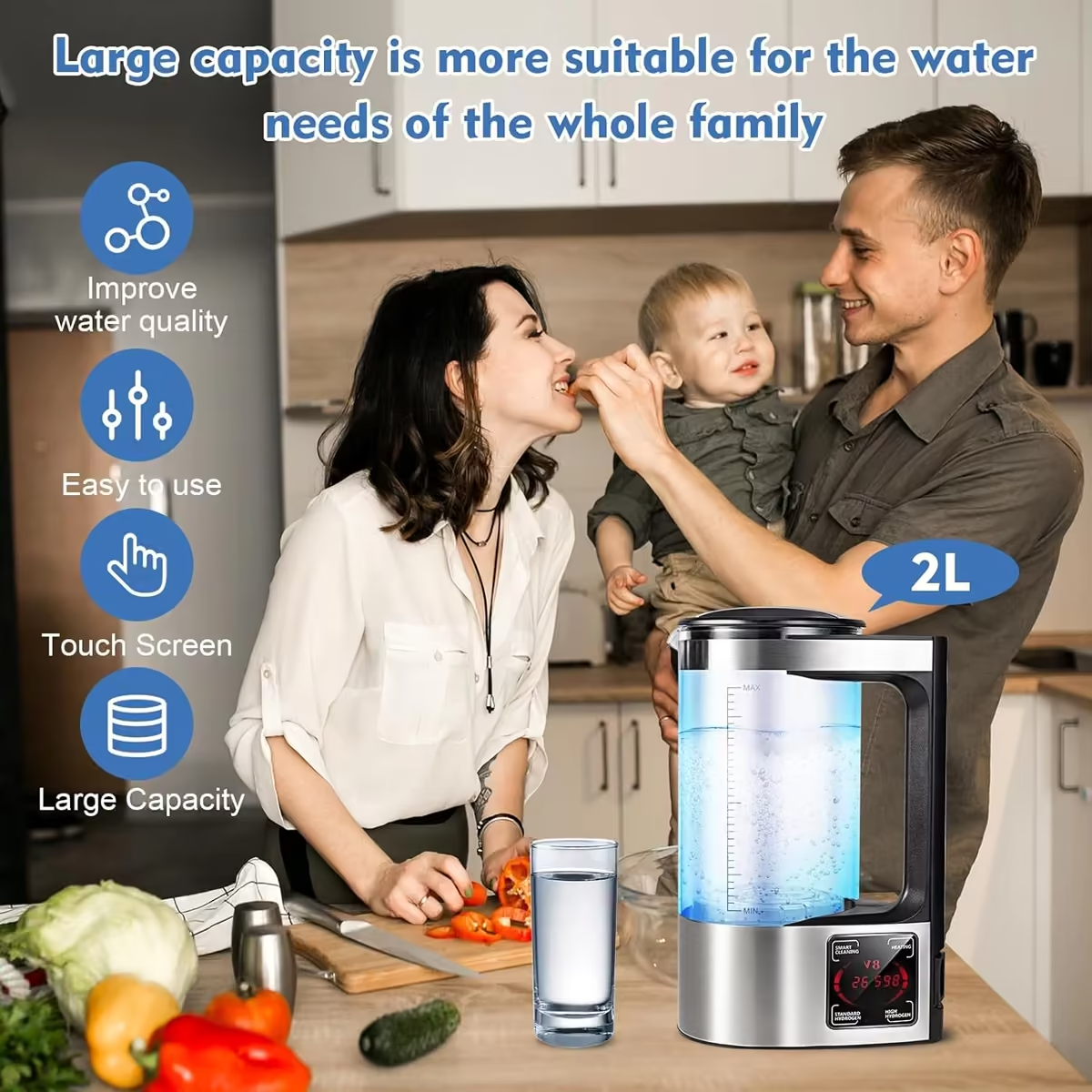
001Should I source a hydrogen water bottle or a countertop generator?
Choose a bottle when portability, personal use, gifting, or e-commerce shipping is the priority. Choose a countertop generator when buyers need larger daily volumes, household use, or a fixed installation. Your target channel, water volume, power standard, and service model should decide the format.
002Which product format is best for a first private-label launch?
A proven standard model with logo, packaging, and manual customization usually reduces development risk. It lets a new brand validate demand before investing in tooling or major engineering changes. Final selection should still consider target price, market requirements, order quantity, and after-sales capacity.
003How do I compare portable hydrogen bottle models?
Compare usable capacity, electrolysis configuration, cycle options, charging method, materials, sealing design, measured hydrogen performance, accessories, documentation, and serviceability. Do not compare headline concentration alone; ask how the value was tested and under what water, temperature, and timing conditions.
004What bottle capacity should I choose for retail customers?
Smaller bottles are easier to carry and ship, while larger bottles reduce refill frequency. The right capacity depends on user routines, cup-holder fit, package size, target weight, and desired price point. Review physical samples before finalizing packaging and marketing photography.
005Can one product serve both consumer and distributor markets?
Yes, but the offer should be structured differently. Consumers need clear use, care, and warranty information. Distributors need carton data, documentation, pricing tiers, sample support, lead times, and repeat-order control. The same core product can use channel-specific packaging and sales materials.
006What information should I provide before requesting a recommendation?
Share the destination country, sales channel, buyer profile, product type, target quantity, price direction, branding scope, electrical standard, desired launch date, and any reference product. This prevents recommendations that look attractive but do not fit your commercial or compliance needs.
007Are all hydrogen water products suitable for every water source?
No. Water mineral content, temperature, dissolved solids, and treatment method can affect operation and measured output. Buyers should define the expected water source and follow the model-specific instructions. Avoid promising compatibility with every water type unless it has been tested for that product.
008What is the difference between a standard model, OEM, and ODM?
A standard model uses an existing specification. OEM commonly adds brand-controlled elements such as logo, color, packaging, or accessories. ODM may involve deeper product configuration or engineering. The terms vary by supplier, so the quotation should list exactly what changes and what remains standard.
009When is a custom mold justified?
Custom tooling makes sense when a distinctive structure is commercially important, expected volume supports the investment, and the schedule allows engineering validation. For early market testing, an existing platform with branded finishes often reaches the market faster and carries less technical risk.
010Can PHYFLOW help compare several models before sampling?
Yes. Provide the use case, market, quantity, required features, and commercial target. The comparison can then focus on feasible models, available documentation, customization limits, sample cost, MOQ, and expected lead time rather than a generic feature list.
Hydrogen Performance
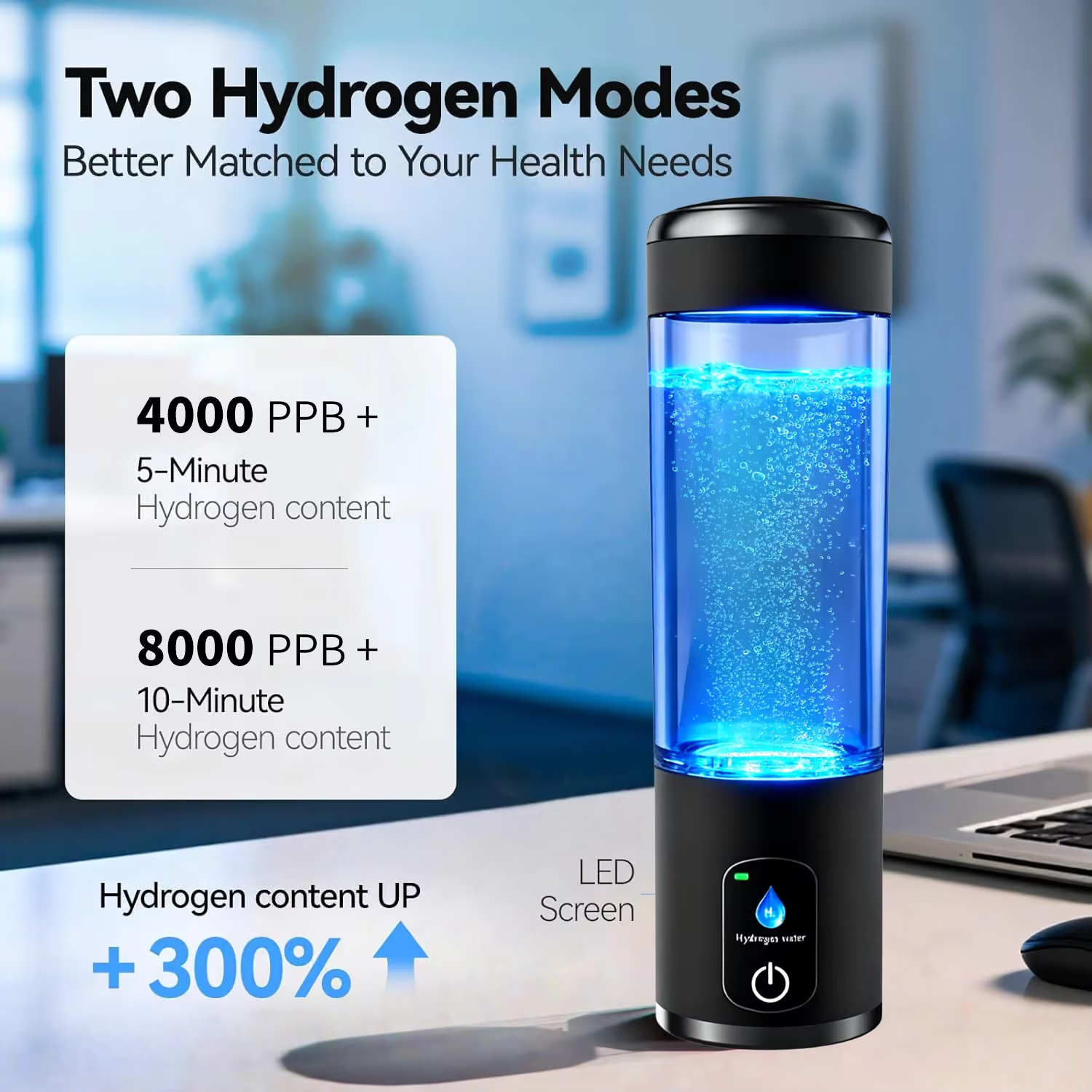
011What does PPB mean on a hydrogen water product?
PPB means parts per billion and is commonly used to express dissolved molecular hydrogen concentration in water. A PPB value is meaningful only when the test method, water condition, temperature, cycle, sampling time, and instrument are stated. Marketing should not treat one laboratory reading as a universal result.
012Why can measured hydrogen concentration vary between tests?
Results can vary with water composition, temperature, fill level, cycle duration, seal condition, electrode condition, measurement method, and the delay between generation and testing. Use a repeatable protocol and compare multiple readings rather than relying on one result.
013How should a buyer verify a hydrogen concentration claim?
Ask for the exact model, test conditions, instrument or laboratory method, sample timing, and repeat data. For critical claims, arrange independent testing on the production version. Product pages and packaging should use values supported by that exact configuration, not by a different model.
014Does a longer generation cycle always produce more hydrogen?
Not necessarily. Output may increase over part of the cycle, but the relationship is not unlimited or identical across water conditions. Use only the cycle options and fill levels specified for the model, and verify performance using a defined test protocol.
015How quickly does dissolved hydrogen leave the water?
Molecular hydrogen can dissipate after a cycle, especially when the container is open, warm, shaken, or transferred. Users should follow the product instructions and generally consume prepared water promptly. Exact retention depends on the container, seal, temperature, and handling.
016Does water temperature affect performance?
Yes. Temperature can affect gas solubility, electrolysis behavior, and measurement results. Use water within the model's stated operating range. Do not use very hot, frozen, or otherwise unsuitable water unless the product documentation specifically permits it.
017Is ORP the same as dissolved hydrogen concentration?
No. Oxidation-reduction potential can be influenced by several substances and water conditions. It is not a direct replacement for a validated dissolved-hydrogen measurement. Use an appropriate method when reporting hydrogen concentration and avoid converting ORP into unsupported PPB values.
018What is SPE/PEM electrolysis in a hydrogen water product?
SPE/PEM describes a membrane-based electrolysis approach used to separate reaction products and support controlled gas generation. Performance still depends on the complete cell design, materials, current control, water conditions, and maintenance. The acronym alone does not prove output or product quality.
019Can the same electrolysis module be used in every product format?
No. Bottle, countertop, inhalation, bath, and commercial systems have different flow, pressure, cooling, power, sealing, and service requirements. Each configuration should be engineered and tested as a complete product rather than assumed equivalent because it uses a similar membrane or electrode material.
020Can PHYFLOW provide performance data for a specific production model?
Available data can be reviewed for the selected model and version. If your market needs a particular test protocol or independent report, define it before the order so feasibility, sample selection, cost, and timing can be confirmed in writing.
Materials & Safety
021Which materials should be reviewed for food-contact parts?
Review every component that contacts water, including the vessel, lid, seals, tubing, filters, electrodes, and internal fittings. Material declarations and applicable test reports should match the exact production version and target-market requirement.
022What does BPA-free mean for a hydrogen water bottle?
It generally means relevant plastic parts are specified without bisphenol A, but the claim should be tied to identified materials or suitable evidence. Do not assume that all parts are covered by a single general statement; confirm which food-contact components are included.
023Is glass better than plastic for hydrogen water bottles?
Each has tradeoffs. Glass offers a premium feel and good visibility but can be heavier and more fragile. Suitable engineered plastics can reduce weight and breakage risk. Choose based on material evidence, drop expectations, shipping method, user setting, and target price.
024Why are electrode materials important?
Electrodes operate inside the electrolysis system and affect durability, efficiency, and product performance. Buyers should review the specified substrate, coating, cell design, water-contact arrangement, and test evidence for the exact model rather than relying on a broad material slogan.
025What battery documents may be needed for shipping?
Depending on the battery and transport method, logistics partners may request documents such as UN38.3 test information, a safety data sheet, battery specifications, or package declarations. Requirements vary by carrier, route, and destination, so confirm them before production and booking.
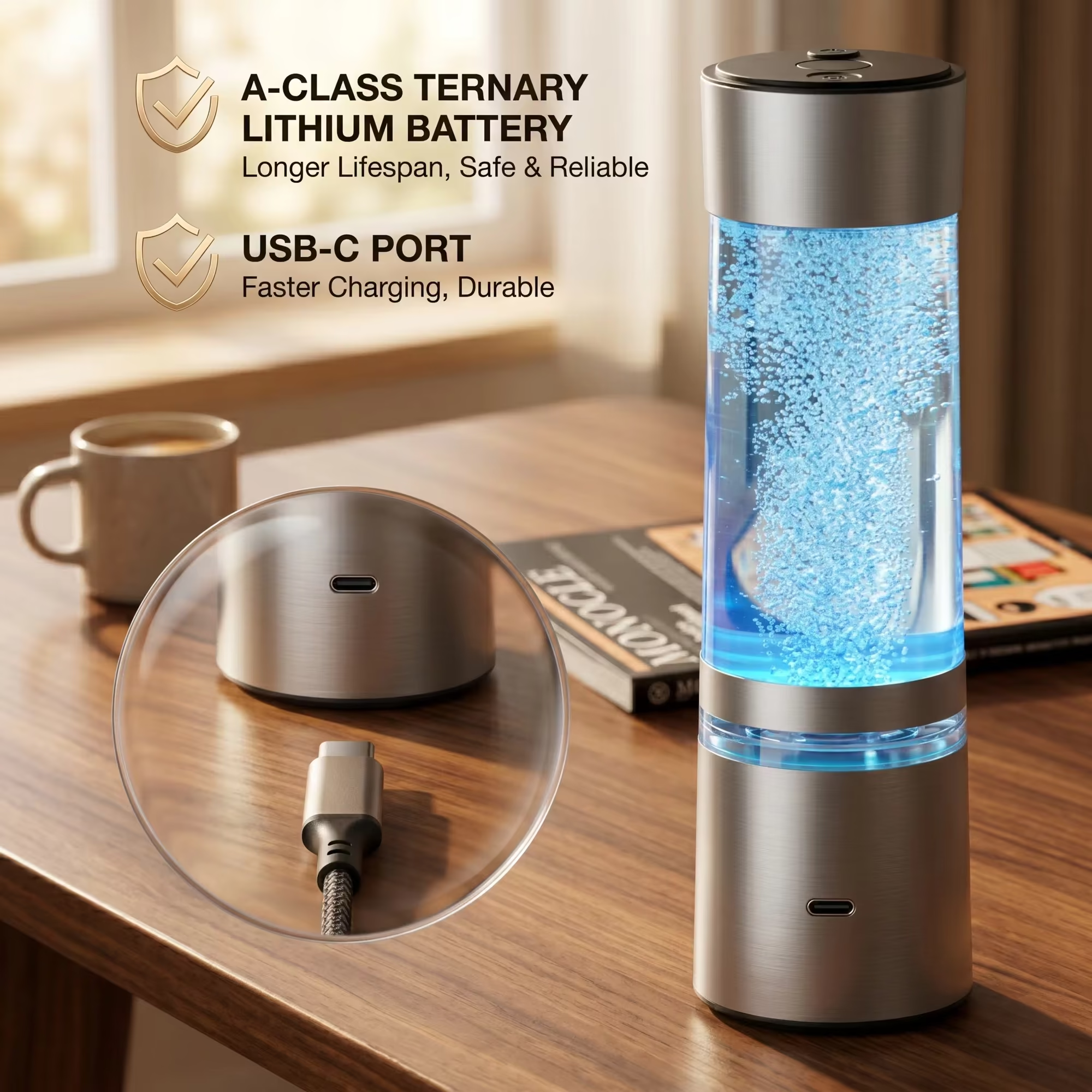
026Can customers use any USB charger?
Use only a power source that matches the product's stated input specification. The manual and label should clearly identify the required voltage, current, connector, and charging precautions. A compatible connector does not automatically mean the electrical output is suitable.
027How are leak risks controlled?
Leak control involves seal design, component tolerances, assembly process, pressure or water testing where applicable, and user instructions. Samples should be checked in normal orientations and transport conditions relevant to the product. Packaging must also protect sealing surfaces from impact.
028Can users clean the product with strong chemicals?
Only cleaning methods listed in the product instructions should be used. Strong acids, alkalis, abrasives, solvents, or unsuitable disinfectants can damage seals, surfaces, membranes, or coatings. If a market requires a specific cleaning protocol, validate it before publication.
029Are hydrogen water products medical devices?
Most consumer hydrogen water products are not automatically medical devices. Classification depends on intended use, claims, design, jurisdiction, and distribution context. Avoid disease-treatment or diagnostic claims unless the product and evidence meet the relevant regulatory requirements.
030What safety information should appear in the user manual?
Include intended use, operating water conditions, charging or power instructions, prohibited uses, cleaning, storage, troubleshooting, disposal, and contact information. Warnings must match the actual product risks and destination-market requirements, not generic text copied from another model.
OEM & Branding
031Which logo methods are available for private-label products?
Depending on the housing material and surface, options may include laser marking, screen printing, pad printing, labels, nameplates, or packaging-only branding. The final method should be confirmed on a physical sample for color, position, adhesion, and abrasion resistance.
032Can the product color be matched to a brand color?
Color matching may be possible through molded color, coating, anodizing, printing, or selected standard finishes. Provide a Pantone or physical reference, but allow for process and material tolerances. Confirm the approved range on samples before bulk production.
033What determines the MOQ for customization?
MOQ depends on the base model, logo process, color, packaging structure, accessories, component purchasing, and production setup. A simple logo on an existing model can require less volume than a custom molded color or new tooling. The quotation should separate each MOQ driver.
034How long does an OEM sample take?
Timing depends on whether the sample uses a stock model, a custom logo, a special finish, new packaging, or engineering changes. The supplier should confirm the sample plan after reviewing artwork and requirements. Shipping time should be added separately.
035Which artwork files are best for logo production?
Provide editable vector files such as AI, EPS, or SVG, plus a PDF reference showing size, color, and placement. Convert fonts to outlines and identify Pantone or other color standards. Raster images alone may not provide clean production edges.
036Can the button icons and display interface be customized?
Some models permit limited interface, icon, language, or firmware changes; others do not. Confirm what is technically editable, the development cost, validation plan, MOQ, and ownership before promising a customized interface to customers.
037Can accessories be bundled under the same brand?
Yes, when compatible accessories are available and the packaging is designed for them. Confirm fit, materials, color, labeling, replacement supply, carton impact, and whether each accessory needs separate compliance documentation.
038Can manuals be produced in several languages?
Yes, but each translation should be reviewed by a qualified native-language reviewer who understands the product. Maintain one approved source version, track revisions, and ensure warnings, labels, packaging, and digital instructions stay consistent across languages.
039Who owns custom artwork and tooling?
Ownership should be stated in the commercial agreement. Clarify who pays for tooling, where it is stored, whether it is exclusive, how long it is retained, and what happens if it is damaged or unused. Artwork ownership and product-design rights are separate issues.
040How can a buyer prevent unauthorized brand use?
Use written brand-authorization rules, approved artwork files, controlled purchase orders, and clear restrictions on overruns or third-party sales. Trademark registration and enforcement remain the brand owner's responsibility in relevant markets.
Packaging & Retail
041What packaging elements can be customized?
Common elements include retail box artwork, box structure, inserts, tray color, manual, warranty card, barcode, labels, accessories, master-carton marks, and shipping protection. Feasibility and MOQ vary by component.
042Should I use a rigid gift box or a folding carton?
Rigid boxes provide a premium presentation but increase cost, volume, and shipping weight. Folding cartons are usually more efficient for e-commerce and retail replenishment. Choose based on channel, target price, unboxing goals, and damage risk.
043Can PHYFLOW add EAN, UPC, FNSKU, or marketplace labels?
Labels can be applied when the buyer supplies approved data and placement instructions. The brand owner is responsible for obtaining valid codes and confirming marketplace rules. Final proofs should be scanned and approved before mass printing.
044Can certification marks be printed on the box?
Only use marks that are valid for the exact product, market, and responsible economic operator. A logo found on a reference sample is not permission to copy it. Confirm documentation and mark-use rules before artwork approval.
045How should multilingual packaging be organized?
Use a controlled content matrix for product name, specifications, warnings, importer details, disposal symbols, and claims. Keep font sizes readable and ensure each language is professionally reviewed. A QR code can support longer digital instructions but should not replace mandatory on-pack information.
046Can recycled or lower-plastic packaging be used?
Often yes, depending on protection requirements, print process, and available materials. Test whether the alternative still protects glass, electronics, seals, and accessories during transport. Environmental claims should be specific and supported rather than broad or absolute.
047Is a packaging drop test recommended?
It is useful for products sold through e-commerce or transported individually. Define the package weight, drop height, orientation, acceptance criteria, and final packaging configuration. A test on a different carton size does not validate the production package.
048When should product photography be created?
Create final retail images after the approved sample confirms logo, color, screen, accessories, and packaging. Early mockups are useful for planning but should not show features or claims that the production version does not include.
049Can I approve packaging before receiving a physical sample?
Digital proofs can confirm text and layout, but a physical packaging sample is better for color, fit, protection, opening experience, and barcode testing. The level of approval should match the commercial risk and launch schedule.
050What information belongs on the master carton?
Typical data includes product name or SKU, quantity, carton dimensions, gross and net weight, lot or order reference, handling marks, origin, and buyer-specific shipping marks. Requirements vary by customer, carrier, warehouse, and destination.
Compliance & Testing
051Does every hydrogen water product need CE marking?
CE requirements depend on the product, its electrical and radio functions, and where it is placed on the market. Identify the applicable EU legislation and conformity route for the exact model. CE is not a general quality award.
052What does FCC compliance mean for an electronic product?
FCC requirements address radio-frequency emissions and, for wireless devices, intentional transmitters in the United States. The applicable procedure depends on the product configuration. Reports and labels must match the production version.
053Is RoHS the same as product safety certification?
No. RoHS restricts certain hazardous substances in electrical and electronic equipment. It does not replace electrical safety, EMC, food-contact, battery, labeling, or other applicable requirements.
054Can a hydrogen water bottle be described as FDA approved?
Do not use that wording unless a specific regulatory basis clearly supports it. Many consumer products are not individually approved by the FDA. Food-contact compliance, facility obligations, labeling, and medical claims are separate topics that require accurate jurisdiction-specific review.
055What food-contact evidence may an importer request?
The importer may request material declarations, supplier records, migration testing, or reports aligned with the destination market. Scope should cover the actual water-contact materials and intended conditions of use.
056What is UN38.3 and when is it relevant?
UN38.3 refers to transport testing for lithium cells and batteries. It is commonly relevant when shipping rechargeable products. Carriers may also request a safety data sheet, battery details, and packaging information.
057Can one test report cover every private-label version?
Sometimes a brand or cosmetic change can remain within an existing technical configuration, but coverage must be confirmed. Changes to electronics, battery, enclosure, materials, power supply, radio module, or intended use may require additional assessment or testing.
058Who is responsible for market compliance?
Responsibilities are shared but not identical. The manufacturer supplies accurate technical information and agreed documents; the importer or brand owner must ensure the finished offer, labeling, claims, registration, and distribution meet the destination market's rules.
059Should the HS code be confirmed before ordering?
Yes. Classification affects customs declarations, duties, and sometimes import controls. A supplier can provide product details and a commonly used reference, but the importer or customs broker should confirm the final classification for the destination country.
060How should compliance documents be controlled after a product change?
Use a revision process that links the model, bill of materials, drawings, firmware, labels, reports, and declaration. Assess every change before shipment. Old reports should not be presented as covering a materially different production version.
Manufacturing & QC
061Which quality-control stages are typical for an OEM order?
Typical stages include incoming-material checks, in-process assembly checks, functional testing, appearance inspection, packaging verification, and pre-shipment review. The exact plan should reflect the product risk, order size, and buyer requirements.
062What is checked during incoming inspection?
Checks may cover identity, quantity, dimensions, appearance, supplier lot, certificates, and selected functional or material attributes. Not every component receives the same inspection level; critical parts should have defined controls.
063How is product function tested before packing?
The production plan can include power-on, controls, charging, display, cycle operation, leakage, abnormal indication, and other model-specific checks. Test fixtures, duration, and acceptance criteria should be documented for the approved version.
064How are cosmetic defects judged?
Use an approved sample and written criteria for scratches, color variation, print position, dust, gaps, and other visible conditions. Viewing distance, lighting, surface, and severity definitions reduce subjective disputes.
065What is AQL inspection?
AQL is a statistical sampling approach used to inspect a batch without checking every unit. The buyer and supplier should agree on inspection level, critical, major, and minor defect limits, and the applicable standard before inspection.
066Can each production batch be traced?
Traceability can use purchase-order numbers, production dates, component lots, serial or batch codes, inspection records, and carton marks. Define the required level before production because individual serial tracking affects systems, labels, and cost.
067Can a third-party inspection company inspect the order?
Yes, when scheduled in advance and the inspection scope is agreed. Provide the approved specification, sample, packaging requirements, quantity, AQL, and defect criteria. Inspection does not replace clear production requirements.
068Why can a production unit differ slightly from a sample?
Normal process tolerances, material batches, and approved component substitutions can create minor variation. Define acceptable limits and lock critical features before mass production. Material or functional changes should not be made silently.
069What happens if defects are found before shipment?
The supplier should contain the affected goods, identify the cause, sort or rework as appropriate, and present corrective evidence. Shipment should follow the agreed acceptance process rather than relying on a verbal assurance.
070How should factory capacity be evaluated?
Look beyond a headline unit count. Review the actual model, component availability, assembly lines, test capacity, staffing, peak-season load, packaging resources, and confirmed lead time for your order.
Orders & Logistics
071What determines production lead time?
Lead time depends on component availability, customization, artwork approval, sample confirmation, testing, order volume, production schedule, and holiday periods. Count from the agreed commercial trigger, such as deposit and final approval, not from the first inquiry.
072Should hydrogen water products ship by air or sea?
Air is faster but usually more expensive and may have stricter battery handling. Sea is economical for larger orders but takes longer. Compare total landed cost, launch deadline, carton volume, battery documentation, and destination charges.
073Which Incoterm should a buyer use?
Choose an Incoterm based on who should control export clearance, freight, insurance, destination handling, and import clearance. EXW, FOB, CIF, DAP, and DDP allocate responsibilities differently. Confirm the named place and current Incoterms edition in the quotation.
074Can products be palletized for warehouse delivery?
Yes, subject to destination and carrier requirements. Confirm pallet material, dimensions, height, weight, wrapping, labels, and any fumigation or treatment rules before booking.
075How can a distributor reduce stockout risk?
Share rolling forecasts, identify long-lead components, place repeat orders before peak periods, and keep artwork stable. A forecast is not a purchase order, but it helps the supplier plan capacity and materials.
076What payment terms are typical for OEM orders?
Terms depend on order value, customization, relationship history, and risk. A deposit with balance before shipment is common for custom production, but the signed quotation or contract controls the actual terms.
077How can repeat orders match the first approved batch?
Keep the approved specification, sample, artwork, bill of materials, color reference, packaging files, and change log. Before each reorder, confirm whether any component, compliance, or buyer requirement has changed.
078Should spare parts be ordered with the first shipment?
A small service stock can reduce after-sales delays for replaceable items such as seals, cables, caps, or approved modules. The suitable quantity depends on product design, expected sales, warranty policy, and repair model.
079How should warranty terms be defined?
Specify the warranty period, start date, covered defects, exclusions, evidence required, remedy, freight responsibility, and local consumer-law obligations. Avoid vague lifetime claims that the service model cannot support.
080What destination information is needed before shipping?
Provide consignee details, address, contact, tax or import identifiers, delivery terms, warehouse rules, label requirements, broker information, and any appointment process. Confirm documents before cargo departure.
Use & Maintenance
081What should a user do before first use?
Read the model-specific manual, inspect the product, charge it with the specified input, rinse permitted water-contact parts, fill with suitable water, and run any initial procedure stated by the manufacturer. Do not copy first-use steps from another model.
082How often should a hydrogen water bottle be cleaned?
Rinse after regular use and follow the manual's periodic cleaning guidance. Frequency depends on water minerals, use pattern, and product design. Do not immerse electrical parts or use unapproved cleaning agents.
083How can mineral scale be reduced?
Use water within the recommended range, rinse regularly, and follow the approved descaling procedure. Mineral-rich water may require more frequent care. Never scrape electrodes or membranes with sharp tools.
084What should be checked if the bottle leaks?
Stop operation, check fill level, lid alignment, seal placement, debris, damage, and whether the correct parts are installed. If leakage continues, discontinue use and contact the seller rather than forcing the lid or modifying the seal.
085How should the product be stored?
Clean and dry it according to the manual, protect it from extreme heat, freezing, direct sunlight, impact, and humid storage, and manage the battery as instructed. Long-term storage procedures can differ by model.
086How can users protect battery life?
Use the specified charger, avoid extreme temperatures, keep connectors dry, and follow the manual for charging and long-term storage. Do not use damaged cables or continue charging a product that becomes abnormally hot or swollen.
087What should a user do if the product will not start?
Check charge level, connector condition, button sequence, lid or sensor position, water level, and error indicators. Use the troubleshooting guide for the exact model. If the fault remains, record a short video and contact support.
088Why might hydrogen performance seem lower over time?
Possible causes include scale, unsuitable water, seal wear, electrode contamination, battery condition, incorrect fill, altered testing method, or delayed measurement. Clean and inspect the product according to the manual before drawing conclusions.
089Can a hydrogen water bottle be taken on an airplane?
Airline and aviation-security rules apply, especially for rechargeable batteries and liquids. Carry-on or checked-baggage rules can vary. Users should check the airline and departure authority before travel and keep the product empty during screening if required.
090What information helps resolve an after-sales case?
Collect the order or serial reference, model, purchase date, photos, a clear fault video, charging details, water type, use steps, error indicators, and troubleshooting already attempted. Structured evidence speeds diagnosis and prevents unnecessary replacement.
Business Scenarios
091How should a distributor launch a new hydrogen bottle line?
Start with a focused model range, approved claims, localized instructions, sample testing, service parts, and a clear reorder plan. Train sales staff on product limits as well as features so customer expectations remain realistic.
092What works well for an e-commerce hydrogen water bundle?
Use compact protective packaging, clear first-use guidance, a compatible charging cable, cleaning instructions, and channel-ready barcode labels. Add accessories only when they are useful and compatible; unnecessary items increase carton volume and support questions.
093Can hydrogen water products be supplied to hotels or hospitality groups?
Yes, if the product format, cleaning process, electrical standard, guest instructions, replacement policy, and service model fit hospitality operations. Pilot testing at one property can reveal operational issues before a larger rollout.
094Are hydrogen water bottles suitable for corporate gifts?
They can be positioned as premium hydration technology when branding, packaging, delivery schedule, and recipient instructions are controlled. Avoid medical promises and confirm gift-box durability, logo approval, and address-fulfillment requirements.
095What should sports and fitness retailers emphasize?
Focus on portability, routine use, cleaning, charging, construction, and verified product specifications. Do not make performance, recovery, or disease claims that exceed the evidence and local advertising rules.
096Can wellness studios use a shared hydrogen water generator?
A shared-use model requires suitable capacity, cleaning procedures, operating instructions, water-source control, staff training, and a service plan. Review local hygiene and business requirements before offering water to clients.
097How should clinics or health professionals evaluate these products?
Separate consumer hydration equipment from regulated medical use. Review intended purpose, evidence, cleaning, contraindication messaging, local rules, and professional responsibilities. Product marketing should not imply diagnosis or treatment without an appropriate regulatory basis.
098What changes are needed for cross-border marketplace sales?
Localize mandatory labels, manuals, warnings, responsible-party details, power information, warranty terms, and customer support. Confirm marketplace listing rules, barcodes, battery documents, taxes, and return logistics for each country.
099How should a brand plan for a seasonal launch?
Work backward from the required warehouse date, including sample approval, artwork, compliance review, production, inspection, and freight. Freeze noncritical changes early and keep a buffer for holidays, carrier congestion, or customs delays.
100What should be included in an OEM inquiry to PHYFLOW?
Include product type, target market, sales channel, expected quantity, required features, logo and color needs, packaging scope, documentation requirements, target price direction, desired delivery date, destination, and reference files. A complete brief enables a faster, more accurate feasibility review.
Prepare a brief that can be quoted and reviewed.
Share the product type, destination market, sales channel, quantity, customization scope, documentation needs, and target timing.