


Safety guide
DIY Electrolysis Hydrogen Generators: Risks and Safer Alternatives
Electrolysis can produce flammable hydrogen and oxygen around electricity and water. An improvised generator can create ignition, pressure, contamination and shock hazards. This page explains risk boundaries and safer alternatives rather than construction instructions.
1. Understand the combined hazards
Hydrogen has low ignition energy and can form a flammable mixture with air. Electrolysis may also produce oxygen and, with unsuitable water or electrodes, unwanted chemical by-products.
A small-looking project can still accumulate gas in tubing, a container or a room. Electrical faults, reverse flow, blocked outlets and weak vessels add shock, fire and rupture risks.
- Assume leaked gas can find an ignition source.
- Do not mix unknown electrolytes or electrode materials.
- Do not seal gas into an unverified container.
- Keep water and exposed electrical connections separated.
2. Set firm project boundaries
Do not use an improvised generator indoors, near people, flames, switches, motors, heaters or batteries. Do not connect homemade gas to masks, drinking water, pressure vessels or appliances.
Schools, workplaces and public demonstrations require a formal risk assessment, responsible supervision and applicable institutional approval. Online plans do not replace engineering review.
- Do not improvise pressure storage.
- Do not inhale or consume homemade output.
- Do not bypass ventilation or safety devices.
- Stop immediately after heat, smell, leakage or unstable current.
3. Choose documented equipment for real applications
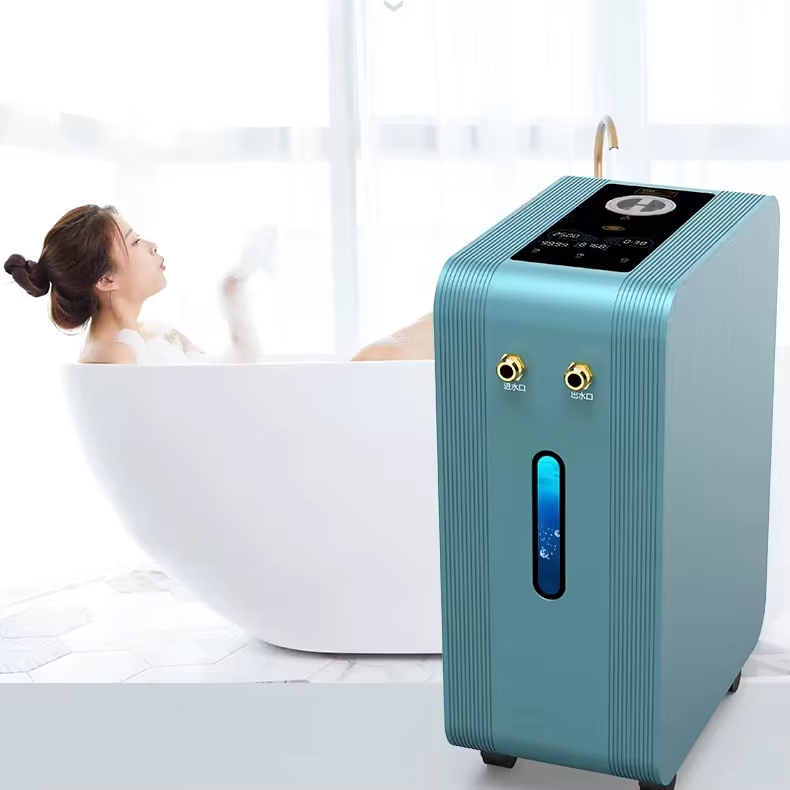
For commercial or continuous use, evaluate purpose-built equipment with defined gas paths, pressure relief, electrical protection, materials, instructions and reports that match the exact model.
Confirm installation, water quality, maintenance, operator training, spare parts and end-of-life handling. The safest response to a DIY search may be not to build the device at all.
- Select equipment for a defined application.
- Verify model-specific safety documents.
- Require installation and operator instructions.
- Use qualified service rather than modifying sealed components.
Safety questions
Is a low-voltage supply enough to make a project safe?
No. Low voltage does not remove flammable-gas, oxygen, pressure, contamination or short-circuit hazards.
Can homemade hydrogen be inhaled or added to drinking water?
No. Improvised output may be contaminated and lacks controlled composition and safety evidence.
Why does this guide omit build steps?
Because procedural construction details could increase fire, pressure and exposure risk. The page focuses on hazard recognition and safer procurement.
Editorial note: product performance depends on the exact model, water conditions, cycle and test method. Health information is educational and is not medical advice.